 orecast
Gold panning in the Alps & Austria
Can you pan for gold in the Alps and in Austria? Yes. Miners worked real gold in the Hohe Tauern for centuries, and rivers like the Salzach and its tributaries still carry fine placer gold today.
Open the map for this region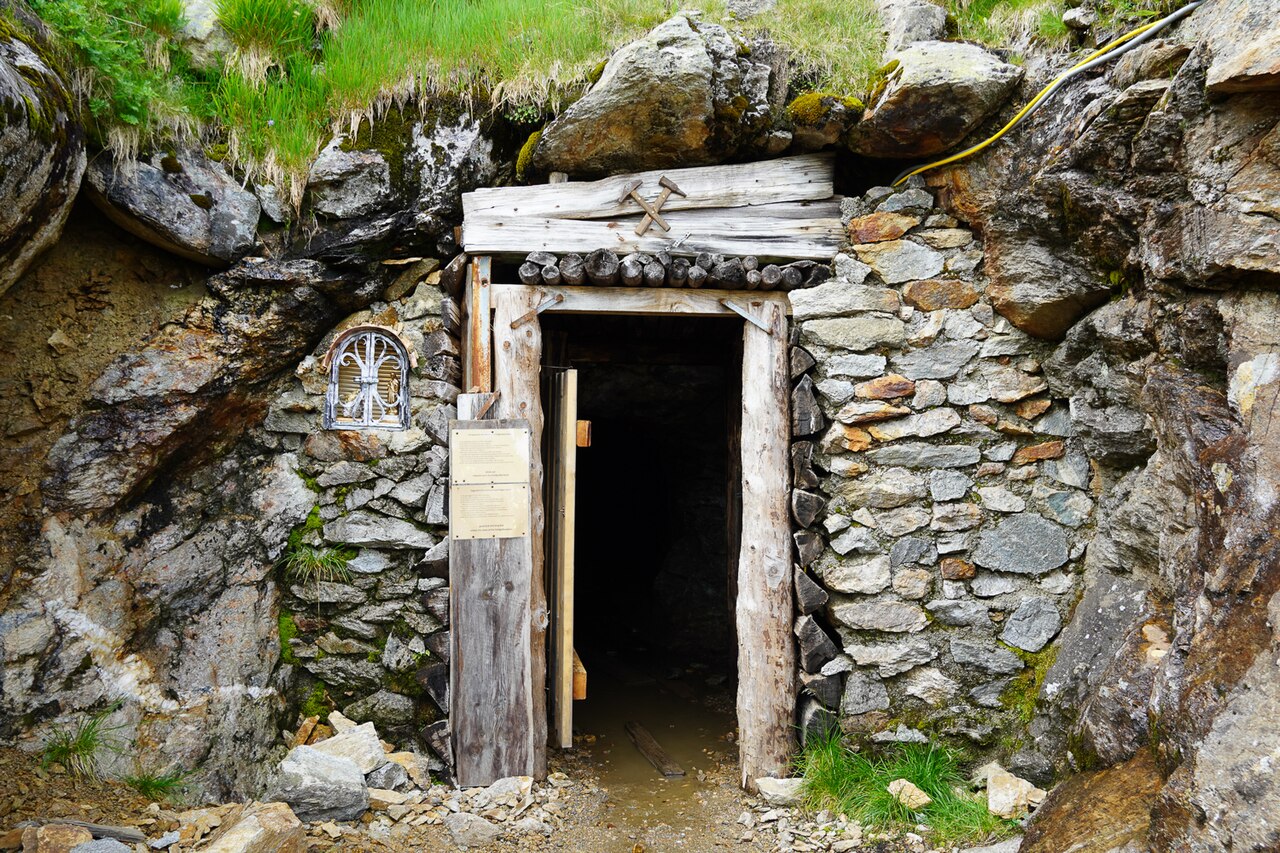
The gold of the Hohe Tauern sits in quartz veins deep inside the Tauern Window, the geological core of the Eastern Alps. Weathering and glacial streams washed fine gold out of them and concentrated it in the valley floors. In the late Middle Ages the Rauris and Gastein valleys formed one of the most important gold districts in Europe. Thousands of miners worked the Sonnblick and the Goldberg group until the Little Ice Age buried the high galleries under ice and the mining died out. orecast shows the documented occurrences and the rocks that favour placer gold.
To pan today, the Rauris valley in Salzburg is the obvious place. At the head of the valley near Kolm-Saigurn there are supervised panning sites, and the village even hosts competitions in summer. Guided courses also run at Heiligenblut in Carinthia and in the Ötztal in Tyrol, where a pan and the technique are provided. The gold lies as tiny flakes in the gravel bars of the mountain streams, finer than a match head and rarely bigger.
A day at the water ends with a few flakes in a vial if it goes well. Nobody gets rich, the last real gold rush here was some four hundred years ago. It is an honest pursuit all the same. The gold is real, it came out of these valleys already in Roman times, and with a little practice you learn to read a gravel bar and find the right spots behind large stones and on the inside of bends. A pan, some patience and a guided course are enough to start, and the course will also tell you where panning is actually allowed.
The law here differs from Germany and depends on the province. On some waters hand-panning for personal use is tolerated, elsewhere you need the landowner's consent or a permit. National parks such as the Hohe Tauern enforce strict protection, and collecting is off-limits across large parts of them. Ask the municipality or your course provider beforehand, and leave motorised gear and shovels at home, because those are banned almost everywhere.
Key
- documented mineral & ore points
- 1007
- fossil sites
- 421
- historical sites
- 388
38 sites within 55 km are flagged as war or WWII sites with possible unexploded ordnance. Never dig there, it is a danger to life.
Documented finds nearby
- KlobenGold · source: GeoSphere Austria - Mineralvorkommen0.8 km
- BrennkogelGold · source: GeoSphere Austria - Mineralvorkommen1.7 km
- TörlkopfGips · source: GeoSphere Austria - Mineralvorkommen2.7 km
- Wasserrad - GoseradBlei · source: GeoSphere Austria - Mineralvorkommen3.3 km
- Edeweißspitze NWGips · source: GeoSphere Austria - Mineralvorkommen3.4 km
- Fuscher Wegscheide / Knappenstube / HochtorSilber · source: GeoSphere Austria - Mineralvorkommen3.5 km
- Edelweißspitze NOGips · source: GeoSphere Austria - Mineralvorkommen3.6 km
- MesenattenSilber · source: GeoSphere Austria - Mineralvorkommen4.6 km
- KendlkopfGips · source: GeoSphere Austria - Mineralvorkommen4.6 km
- PasterzePyrit · source: GeoSphere Austria - Mineralvorkommen4.7 km
- Palik / PaligGold · source: GeoSphere Austria - Mineralvorkommen4.9 km
- WustkogelUran · source: GeoSphere Austria - Mineralvorkommen4.9 km
- Margaritze SPyrit · source: GeoSphere Austria - Mineralvorkommen5 km
- Weißtüchlalm / Seppenbaueralm SE - ProßnitzkarKupfer · source: GeoSphere Austria - Mineralvorkommen5.2 km
Fossil sites nearby
- Eiberg 1Rhaetian · Koessen · source: PBDB18.8 km
- Adnet Schnoll Quarry 5aEarly Hettangian · Schnoll · source: PBDB18.8 km
- Adnet Schnoll Quarry 5bMiddle Hettangian · Schnoll · source: PBDB18.8 km
- Adnet Grosser Langmoos Quarry 2aEarly Hettangian · Schnoll · source: PBDB18.8 km
- Adnet Outcrop N of Schnoll QuarryEarly Hettangian · Schnoll · source: PBDB18.8 km
- Adnet Eisenmann QuarryMiddle Hettangian · Schnoll · source: PBDB18.8 km
- Adnet Grosser Langmoos Quarry 2bMiddle Hettangian · Schnoll · source: PBDB18.8 km
- Adnet Schnoll Quarry 5a1Early Hettangian · Schnoll · source: PBDB18.8 km
- Adnet Lienbacher QuarryMiddle Hettangian · Schnoll · source: PBDB18.8 km
- Eiberg 2Rhaetian · Koessen · source: PBDB18.8 km
Collecting, law & safety
A promising geology is never a guarantee, and you will not find invented numbers here. Collecting and digging are regulated across Europe and usually need a permit. Protected sites, nature reserves and disused mines are off-limits and can be deadly.
Frequently asked questions
Is there really gold in the Alps?
Yes, the gold of the Hohe Tauern is real and was mined underground for centuries. Today the rivers yield fine placer gold, though in very small amounts. It is a hobby with history behind it, not an income.
Where can you pan for gold in Austria?
The best-known spots are the Rauris and Gastein valleys in Salzburg, plus Heiligenblut in Carinthia and sites in the Ötztal in Tyrol. They offer supervised panning areas and guided courses. The Salzach and its tributaries carry the gold down from the Tauern.
Is gold panning legal in Austria?
It depends on the province and the water. Hand-panning is tolerated in many places but not in nature reserves or national parks. Clear the rules with the municipality or a course provider first, and you will be on the safe side.
More guides:
- Gold & ore in the Harz
- Silver & minerals in the Ore Mountains
- Fossils of the Swabian Alb
- Gold & minerals in the Black Forest
- Volcanoes & geology of the Eifel
- Fossils in Solnhofen & the Altmühl valley
- Fossils in the Ruhr area
- Finding amber on the Baltic coast
- Agate & gemstones in Idar-Oberstein
- Find fossils near me
- Gold panning near me
- Rockhounding near me
- How to identify fossils
- How to identify rocks and minerals
- Collecting fossils and minerals: allowed or not?