 orecast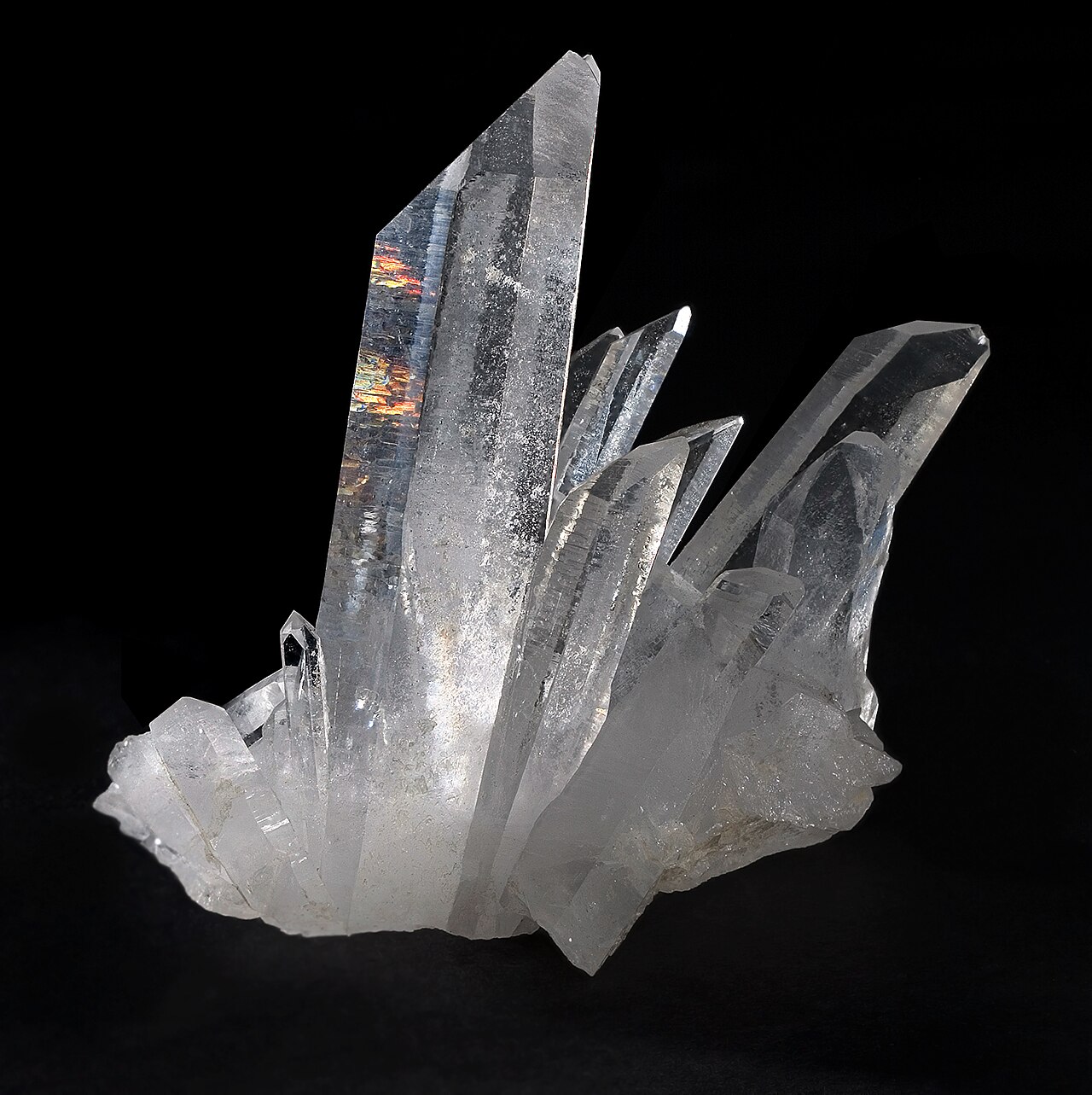
Which minerals a region yields depends on its rock history. Ore veins, granites, volcanic rock and weathering zones each produce different crystals. ORECAST gathers documented find points and shows on the map which raw materials are on record near you, how far they are and which rocks hold them. Dumps, old districts and outcrops are often rewarding, but only with permission and outside protected areas. Open the map and start at your location.
Every landscape carries its own inventory. The old mining districts of the Erzgebirge, Harz and Siegerland left dumps with fluorite, barite and ore minerals. In the Erzgebirge many of them are listed monuments or part of the World Heritage site, and there is no collecting there. The Eifel volcanoes packed a remarkable variety of minerals into small lava quarries. Idar-Oberstein built a whole industry on agate, and along the Baltic coast flint and the occasional agate pebble lie right on the beach. In the Alps, clefts hold rock crystal, though searching there is tightly regulated and in parts of Switzerland requires a permit.
Beginners often expect glassy crystal groups and find weathered grey instead. That is normal. On a dump the good material rarely sits on top; it hides inside plain lumps that need splitting, and a fresh break tells you more than any weathered surface. Searching slowly, covering small areas properly and keeping fewer but better pieces beats filling a bucket. Label every find with its locality. Without that, a mineral is just a pretty stone.
Organised offers make the easiest start. Show mines demonstrate how minerals sit in the rock, and some run collecting areas for visitors. Mineral shows are good for comparing material and meeting regional collectors. In Germany, clubs such as the VFMG arrange guided quarry trips with permission and insurance included, opening sites that otherwise stay locked. An afternoon in a geological collection sharpens your eye for what your own region can realistically produce.
Documented finds nearby
- BGR BSK1000: Erdöl, ErdgasErdöl, Erdgas · source: BGR BSK10002.6 km
- BGR BSK1000: Kalkstein und DolomitsteinKalkstein und Dolomitstein · source: BGR BSK10004.8 km
- MühlhausenErdgas · in Betrieb (Stand GK2000, 2004) · source: BGR GK2000 - Lagerstätten6.9 km
- BGR BSK1000: Kalkstein und DolomitsteinKalkstein und Dolomitstein · source: BGR BSK10009.4 km
- BGR BSK1000: Kies und SandKies und Sand · source: BGR BSK100017.1 km
- BGR BSK1000: Kies und SandKies und Sand · source: BGR BSK100018.1 km
- BGR BSK1000: Kies und SandKies und Sand · source: BGR BSK100020.5 km
- BGR BSK1000: Sandstein und GrauwackeSandstein und Grauwacke · source: BGR BSK100024.9 km
- BGR BSK1000: TiefengesteineTiefengesteine · source: BGR BSK100028 km
- BGR BSK1000: Kalkstein und DolomitsteinKalkstein und Dolomitstein · source: BGR BSK100028.6 km
- BGR BSK1000: Gipsstein und AnhydritsteinGipsstein und Anhydritstein · source: BGR BSK100029.8 km
- BGR BSK1000: GneisGneis · source: BGR BSK100030.1 km
- BGR BSK1000: GneisGneis · source: BGR BSK100033.6 km
- BleicherodeKalisalz · in Betrieb (Stand GK2000, 2004) · source: BGR GK2000 - Lagerstätten34.2 km
Fossil sites nearby
- Oberdorla: Schaumkalk [?orbicularis layers], Lower MuschelkalkAnisian · Muschelkalk · source: PBDB2.1 km
- Thuringer SenkeLadinian · source: PBDB5.7 km
- Eigenrieden near MuehlhausenAnisian · source: PBDB10.1 km
- Rothenburg ob der Tauber Anisian · source: PBDB10.1 km
- BischofrodaAnisian · source: PBDB13.1 km
- Großenbehringer, near GothaLadinian · Muschelkalk · source: PBDB14.2 km
- upper Muschelkalk, Schlotheim area, ThüringenLadinian · Muschelkalk · source: PBDB16.2 km
- Schlotheim, Gotha (BMNH)Anisian · Muschelkalk · source: PBDB17.8 km
- Kindel near EisenachIllyrian · Muschelkalk · source: PBDB19.7 km
- Eisenach, 1979 temporary exposureSemicostatum · source: PBDB21 km
Collecting, law & safety
A promising geology is never a guarantee, and you will not find invented numbers here. Collecting and digging are regulated across Europe and usually need a permit. Protected sites, nature reserves and disused mines are off-limits and can be deadly.
Affiliate links: buying through them earns ORECAST a small commission, your price stays the same. As an Amazon Associate, ORECAST earns from qualifying purchases. All recommendations →
Frequently asked questions
Where do I find minerals near me?
Open the map and tap your surroundings. ORECAST shows documented find points and raw materials nearby. Old mining dumps and natural outcrops are classic spots, always only with permission.
Which minerals can you collect in Germany?
Common are quartz and rock crystal, agate, fluorite and barite, plus ore minerals from the old mining districts. The map shows what is on record locally.
Is collecting minerals allowed?
Loose specimens outside protected areas are often allowed, larger digging needs a permit. Old adits are off-limits due to collapse and gas hazard. Ask the landowner and the authorities.
More guides:
Gold & ore in the Harz · Silver & minerals in the Ore Mountains · Fossils of the Swabian Alb · Gold & minerals in the Black Forest · Volcanoes & geology of the Eifel · Fossils in Solnhofen & the Altmühl valley · Gold panning in the Alps & Austria · Fossils in the Ruhr area · Finding amber on the Baltic coast · Agate & gemstones in Idar-Oberstein · Find fossils near me · Gold panning near me · How to identify fossils · How to identify rocks and minerals · Collecting fossils and minerals: allowed or not?