 orecast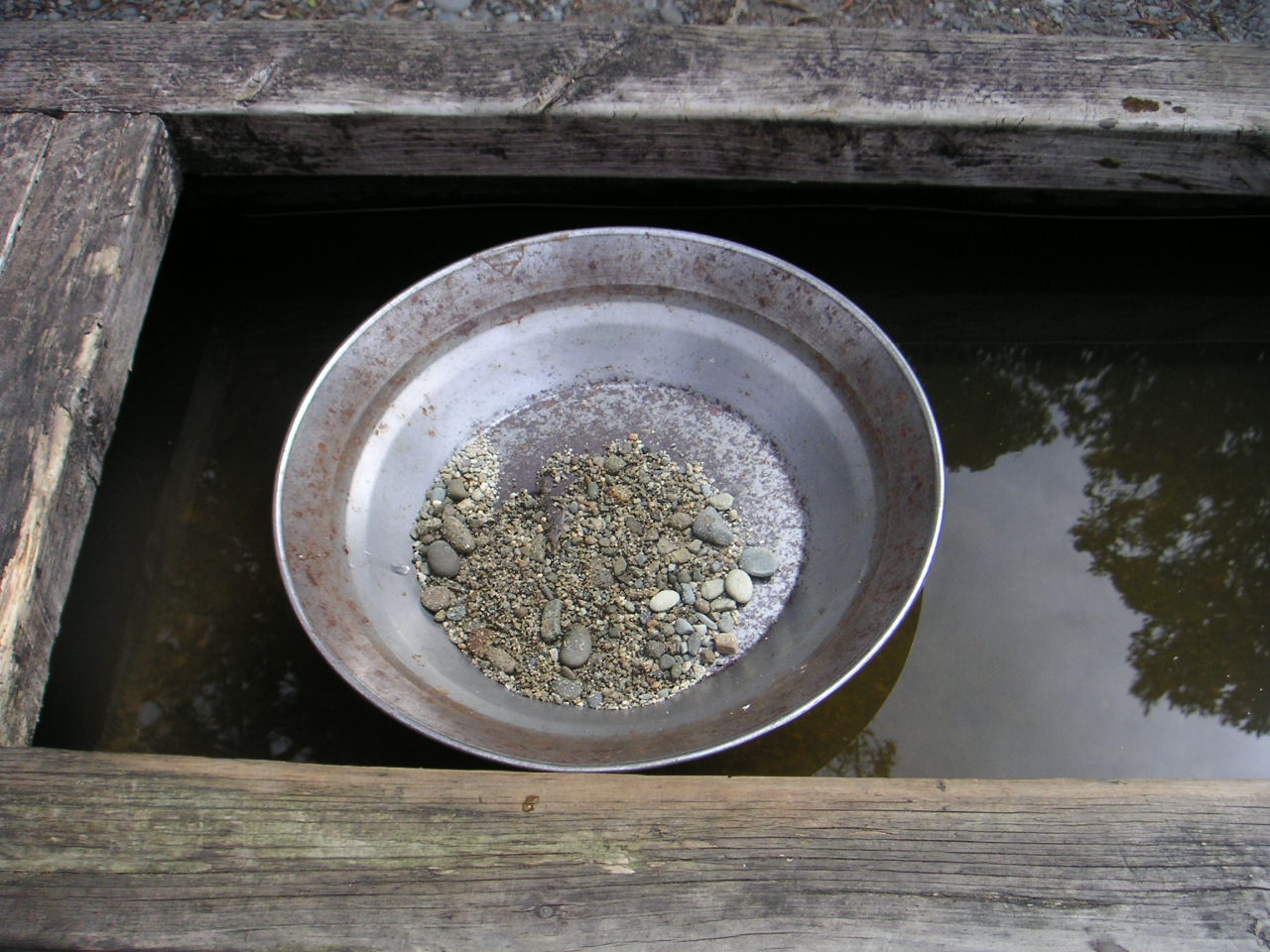
Placer gold forms when weathering releases fine gold from gold-bearing rock and streams concentrate it in placers. Along the Upper Rhine and in some Black Forest streams this has been recorded since Roman times. Nobody gets rich, the gold is fine and the amounts are small. As a hobby it is real and the geology allows for it. ORECAST shows documented gold occurrences nearby and the raw materials on record around you, plainly and without promises.
The Upper Rhine is not the only documented area. Gold was mined for centuries around Goldkronach in Germany's Fichtel Mountains, and medieval washing mounds still line some streams in the Erzgebirge. Alpine rivers such as the Salzach carry fine gold out of the Hohe Tauern, once a proper mining district. The same pattern repeats across Europe, from the Scottish Highlands to Lapland: old basement rock, quartz veins and streams that have been sorting the material for thousands of years. For real planning, the historic districts are the place to start. Romans already panned the Upper Rhine and the Black Forest streams, covered in the Black Forest guide. In Hesse the Eder near Bad Wildungen carries fine gold, and in Bavaria the Isar, Inn and Danube move alpine debris. In the north the old washing sites line the edge of the Harz along the Oker and Innerste, while medieval washing mounds trace the Mulde in the Ore Mountains.
Beginner mistakes look the same everywhere. Too much material in the pan and hurried movements, and the fine gold washes out with the sand. Take less sediment and work slowly. A realistic afternoon ends with a few tiny flakes in a glass vial. Central European streams carry dust gold, not nuggets, and for many people that patience game is exactly the appeal. Digging into banks or running motorised equipment goes too far, damages the streambed and tends to be illegal on top of it.
A guided panning course is the easiest start. Operators along the Upper Rhine, in the Fichtel Mountains and on Austrian Tauern streams provide technique, gear and legal spots in one go. The gold mining museum in Goldkronach covers the history of Franconian gold, and Germany even has an active panning scene with its own championships. After that, heading to a stream on your own feels far less daunting, with a pan, patience and permission sorted beforehand.
Documented finds nearby
- Nordöstlich von Freiburg i. Br.Natursteine (Metamorphite etc.) - nachgewiesen · nachgewiesen · depth KMR50 L 7912-68, Bearbeitung 2010 · source: LGRB BW - Rohstoffvorkommen KMR500 km
- BGR BSK1000: Kies und SandKies und Sand · source: BGR BSK10000 km
- Östlich von Freiburg i. Br. HerdernNatursteine (Metamorphite etc.) - nachgewiesen · nachgewiesen · depth KMR50 L 7912-67, Bearbeitung 2010 · source: LGRB BW - Rohstoffvorkommen KMR501.5 km
- Südöstlich RoßkopfNatursteine (Metamorphite etc.) - prognostiziert · prognostiziert · depth KMR50 L 7912-69, Bearbeitung 2010 · source: LGRB BW - Rohstoffvorkommen KMR501.7 km
- Westlich von HeuweilerNatursteine (Metamorphite etc.) - nachgewiesen · nachgewiesen · depth KMR50 L 7912-61, Bearbeitung 2010 · source: LGRB BW - Rohstoffvorkommen KMR505.3 km
- Südöstlich von GlottertalNatursteine (Metamorphite etc.) - nachgewiesen · nachgewiesen · depth KMR50 L 7912-65, Bearbeitung 2010 · source: LGRB BW - Rohstoffvorkommen KMR505.6 km
- Nördlich von EschbachNatursteine (Metamorphite etc.) - nachgewiesen · nachgewiesen · depth KMR50 L 7912-66, Bearbeitung 2010 · source: LGRB BW - Rohstoffvorkommen KMR506 km
- Südöstlich von OberglottertalNatursteine (Metamorphite etc.) - nachgewiesen · nachgewiesen · depth KMR50 L 7912-72, Bearbeitung 2023 · source: LGRB BW - Rohstoffvorkommen KMR506.7 km
- Nordwestlich von WittnauZiegeleirohstoffe - vermutet · vermutet · depth KMR50 L 8112-15, Bearbeitung 2016 · source: LGRB BW - Rohstoffvorkommen KMR507.3 km
- Nordwestlich von Freiburg i. Br.-RieselfeldKiese, sandig - nachgewiesen · nachgewiesen · depth KMR50 L 7912-27, Bearbeitung 2010 · source: LGRB BW - Rohstoffvorkommen KMR507.6 km
- Schönberg westlich von Merzhausen, Gebiet Fusackerkombiniert (nachgewiesen): Natursteine (Kalksteine) und Hochreine Kalksteine · nachgewiesen · depth KMR50 L 8112-10, Bearbeitung 2016 · source: LGRB BW - Rohstoffvorkommen KMR507.6 km
- Östlich von OberglottertalNatursteine (Metamorphite etc.) - nachgewiesen · nachgewiesen · depth KMR50 L 7914-1, Bearbeitung 2023 · source: LGRB BW - Rohstoffvorkommen KMR507.7 km
- Südlich von WaldkirchNatursteine (Metamorphite etc.) - nachgewiesen · nachgewiesen · depth KMR50 L 7912-59, Bearbeitung 2010 · source: LGRB BW - Rohstoffvorkommen KMR507.9 km
- Südlich von UmkirchKiese, sandig - nachgewiesen · nachgewiesen · depth KMR50 L 7912-26, Bearbeitung 2010 · source: LGRB BW - Rohstoffvorkommen KMR508.4 km
Fossil sites nearby
- Merzhausen, south of BreisgauPelsonian · Jena · source: PBDB6.8 km
- Engstlatt 23Sinemurian · source: PBDB7.5 km
- Engstlatt 14Hettangian · source: PBDB7.5 km
- Engstlatt 18Hettangian · source: PBDB7.5 km
- Engstlatt 21Sinemurian · source: PBDB7.5 km
- Engstlatt 22Sinemurian · source: PBDB7.5 km
- Engstlatt 16Hettangian · source: PBDB7.5 km
- Engstlatt 15Hettangian · source: PBDB7.5 km
- Engstlatt 17Hettangian · source: PBDB7.5 km
- Engstlatt 19Hettangian · source: PBDB7.5 km
Collecting, law & safety
A promising geology is never a guarantee, and you will not find invented numbers here. Collecting and digging are regulated across Europe and usually need a permit. Protected sites, nature reserves and disused mines are off-limits and can be deadly.
Affiliate links: buying through them earns ORECAST a small commission, your price stays the same. As an Amazon Associate, ORECAST earns from qualifying purchases. All recommendations →
Frequently asked questions
Can you really pan for gold in Germany?
Yes. Along the Upper Rhine and in some Black Forest and Alpine streams there is fine placer gold. It is a hobby, not an income. ORECAST shows where gold is documented or plausible.
Is gold panning allowed?
On public waters it is often tolerated, but nature protection and local rules apply. On private land and in protected areas it needs permission. Ask the municipality first.
What equipment do I need?
A gold pan is enough to start, plus patience. The trick is to work calm spots behind obstacles where heavy material settles.
More guides:
Gold & ore in the Harz · Silver & minerals in the Ore Mountains · Fossils of the Swabian Alb · Gold & minerals in the Black Forest · Volcanoes & geology of the Eifel · Fossils in Solnhofen & the Altmühl valley · Gold panning in the Alps & Austria · Fossils in the Ruhr area · Finding amber on the Baltic coast · Agate & gemstones in Idar-Oberstein · Find fossils near me · Rockhounding near me · How to identify fossils · How to identify rocks and minerals · Collecting fossils and minerals: allowed or not?