 orecast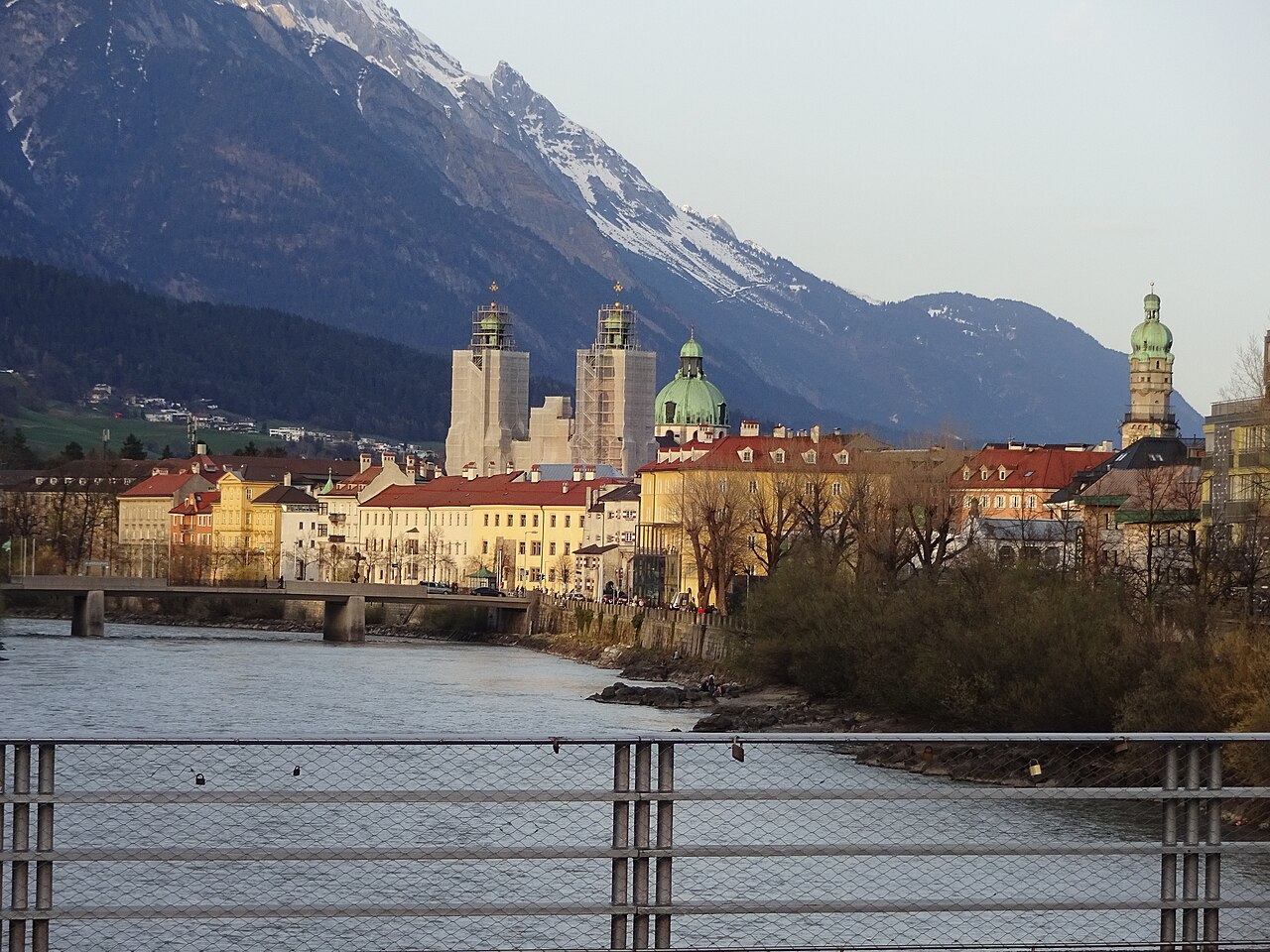
Innsbruck is wedged between two very different mountain ranges, and each tells its own story. To the north the Nordkette rises steeply, part of the Karwendel and the Northern Limestone Alps. Its pale Wetterstein limestone formed more than 200 million years ago in a warm, shallow Triassic sea, and its beds hold thick-shelled megalodont clams and the occasional ammonite. To the south, the Tux and Zillertal Alps begin the crystalline Central Alps of gneiss and mica schist, an entirely different rock.
That crystalline south is what draws mineral collectors. In alpine clefts, fissures that opened during mountain building and filled from hot solutions, rock crystal, smoky quartz, epidote and red garnet grew over time. The Zillertal has been known among collectors for its garnets and crystals for generations, even if the good spots lie high and take real effort to reach. Further east, at Schwaz, late medieval miners pulled so much silver and copper from the mountain that the town briefly ranked among the largest in the Habsburg lands and helped build the Fugger fortune.
Searchers today find pebbles from the whole catchment in the gravel bars of the Inn and the Sill, everything from limestone to gneiss. The show mine at Schwaz leads into the old silver galleries, and the collections of the University of Innsbruck display what the clefts can yield. A good rock crystal found by your own hand demands fitness and patience; nobody hands it to you. ORECAST shows the documented sites within reach and puts them in context.
The rules in high country are strict and sensible. Large areas are protected, the Karwendel nature park among them, where collecting is heavily restricted. Cleft minerals may only be gathered with the landowner's consent, and some valleys have their own rules for the traditional crystal hunters known as Strahler. Old galleries can kill, and the high mountains do not forgive carelessness; weather and rockfall claim lives every year.
Minerals & raw materials near Innsbruck
Within 30 km of Innsbruck our database holds 180 documented mineral and ore points. The most common commodities nearby:
Documented finds nearby
- Innsbruck, Hoher WegKupfer · source: GeoSphere Austria - Mineralvorkommen1.2 km
- ÖlbergBlei · source: GeoSphere Austria - Mineralvorkommen1.6 km
- Stadtwald in GramartBlei · source: GeoSphere Austria - Mineralvorkommen2.6 km
- Höttinger GrabenBlei · source: GeoSphere Austria - Mineralvorkommen2.9 km
- BrandlschrofenBlei · source: GeoSphere Austria - Mineralvorkommen3 km
- Höttinger Bild (Perwinckhl)Blei · source: GeoSphere Austria - Mineralvorkommen3 km
- EnzianhütteKupfer · source: GeoSphere Austria - Mineralvorkommen3.5 km
- LehnerstollenBlei · source: GeoSphere Austria - Mineralvorkommen3.8 km
- PerfalBlei · source: GeoSphere Austria - Mineralvorkommen3.8 km
- BodensteinalmEisen (Siderit) · source: GeoSphere Austria - Mineralvorkommen4 km
- Höttinger Alm (Finstere und Lichte Gufeln)Blei · source: GeoSphere Austria - Mineralvorkommen4.3 km
- GarzanhofBlei · source: GeoSphere Austria - Mineralvorkommen4.6 km
- SulzköpflLimonit (Eisenerz) · source: GeoSphere Austria - Mineralvorkommen5.4 km
- Kranebitten ( Kerschbuchhof)Zink · source: GeoSphere Austria - Mineralvorkommen5.4 km
Fossils near Innsbruck
- Innsbrucker Nordkette, Alps, AustriaJulian · Wetterstein · source: PBDB3.5 km
- Rumer AlmMiddle Triassic · Wetterstein · source: PBDB4 km
- Höttinger AlmAnisian · Wetterstein · source: PBDB4.3 km
- SeegrubeMiddle Triassic · Wetterstein · source: PBDB4.6 km
- Kerschbuchhof near InnsbruckAnisian · source: PBDB5.2 km
- Arzler ScharteAnisian · Wetterstein · source: PBDB5.8 km
- Frau HittMiddle Triassic · Wetterstein · source: PBDB5.8 km
- SchneekarMiddle Triassic · Wetterstein · source: PBDB5.8 km
- Vils (Rothen Stein)Opalinum · source: PBDB6 km
- BrandjochMiddle Triassic · Wetterstein · source: PBDB6.4 km
History & archaeology near Innsbruck
- Palais Tannenberg-Enzenbergcastle_monument0.3 km
- Ansitz Angerzellcastle_monument0.6 km
- Hofburgcastle_monument0.7 km
- Palais Fugger-Taxiscastle_monument0.8 km
- Ansitz Schlandersbergeckcastle_monument0.8 km
- Palais Troyer-Spaurcastle_monument0.8 km
- Palais Trappcastle_monument0.9 km
- Kolbenturmcastle_monument0.9 km
- Schloss Windeggcastle_monument1 km
- Ansitz Liebeneggcastle_monument1.2 km
Treasure hunting, law & safety
We'd rather underclaim than oversell: a promising geology is no guarantee, and you won't find invented numbers here. Digging and collecting are regulated across Europe and usually need a permit, and protected monuments and nature reserves are off-limits.
Frequently asked questions
Can I dig or collect finds near Innsbruck?
Digging and collecting finds are regulated in most of Europe and usually need a permit; protected monuments and nature reserves are off-limits. ORECAST shows where protected/historical sites lie so you can check the local rules first. It is information, not a permit.
Where can I find gold near Innsbruck?
Around Innsbruck, gold is at most plausible as river placer (hobby-scale panning), not a documented deposit unless flagged on the map. ORECAST clearly separates documented finds from merely plausible geology, and it never promises gold.
What minerals and raw materials occur near Innsbruck?
Within 30 km we list 180 documented mineral/ore points. The most common nearby are: Blei, Kupfer, Eisen (Siderit), Ölschiefer, Zink.
Are there fossils near Innsbruck?
Yes, 631 scientific fossil localities are recorded within 30 km (with geological age and formation).
Is digging dangerous near Innsbruck?
Possibly: former war zones can hold unexploded ordnance. Where a site is flagged with the ☢️ warning, never dig, it is a danger to life; contact the bomb-disposal service if in doubt.
Identify & compare:
Identify fossils · Identify rocks & minerals · Find gold · Find silver · Find gemstones · App comparison
Explore other regions:
Bolzano (South Tyrol) · Munich · Solnhofen/Eichstätt · Salzburg · Nuremberg · the Salzkammergut