 orecast
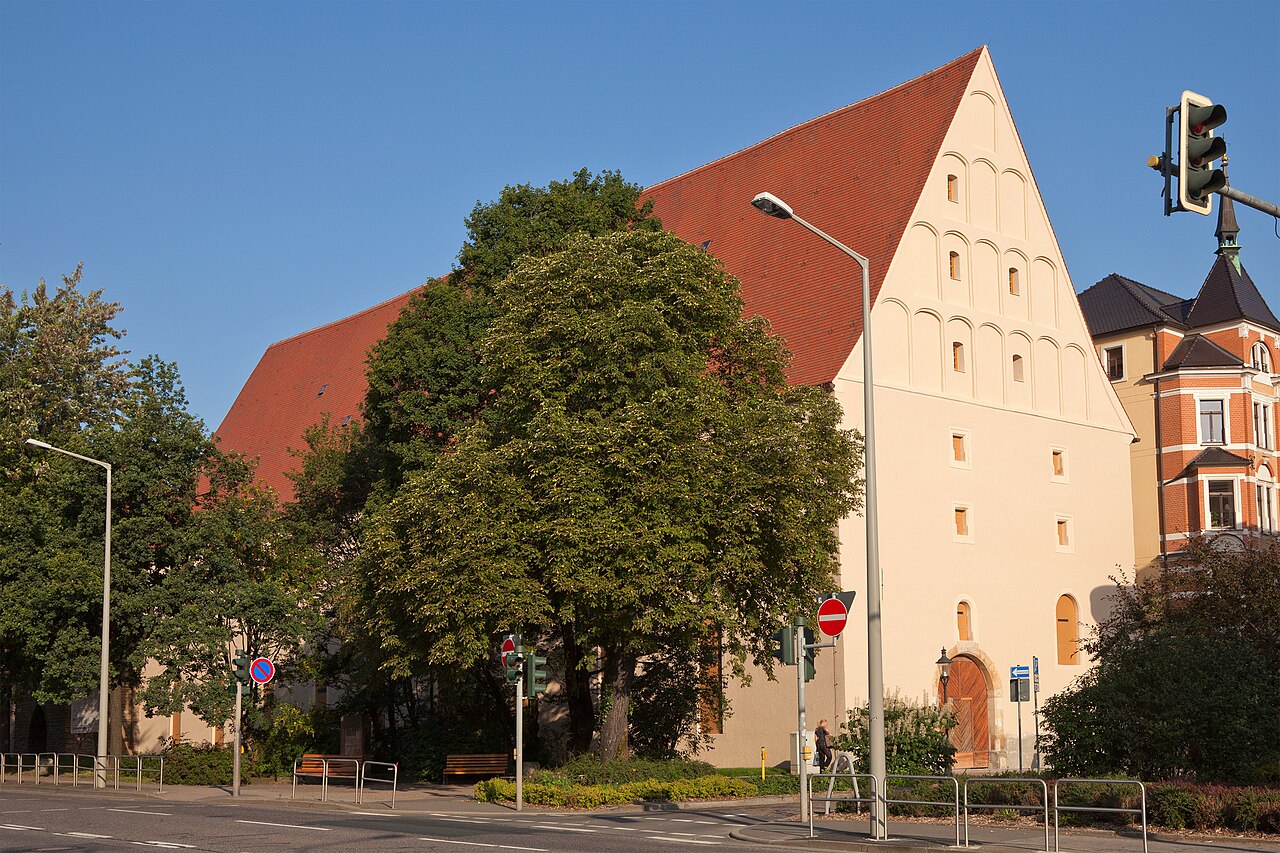
Freiberg in the Ore Mountains owes its existence to a single event. In 1168 settlers struck silver ore near the hamlet of Christiansdorf, setting off the first of the region's great mining rushes and turning the Margraves of Meissen into some of the wealthiest princes of medieval Germany. The geology behind it is a basement of gneiss cut by hydrothermal veins, fractures in which hot fluids deposited silver, lead and zinc minerals over millions of years.
Miners followed those veins underground for more than 800 years, with pauses but never a final stop until modern times. In 1765 the town founded its mining academy, today the TU Bergakademie Freiberg and the oldest university of mining and metallurgy still operating anywhere. Ore production in the district ended in 1969. Since 2019 the Freiberg mining landscape has been part of the Erzgebirge UNESCO World Heritage area, listed jointly with the Czech side of the mountains.
The town's standing among mineral collectors has outlived its mines. The terra mineralia exhibition in Freudenstein Castle houses one of Europe's major mineral collections, the City and Mining Museum tells the story of the district, and guided tours descend into the Reiche Zeche teaching mine. Quartz, fluorite, barite and galena are documented from the Freiberg veins. Native silver is a genuine rarity, as it already was in mining days. ORECAST maps the documented occurrences in the district along with the minerals described at each of them.
The traces of that history are protected. Many of the district's dumps, shafts and smelter sites are listed monuments, and several belong to the World Heritage site, among them the Halsbrücke smelting complex and the Alte Mordgrube mine near Brand-Erbisdorf. There is no collecting and no digging there. Open adits and shafts are deadly and stay shut. The minerals of the district are on show in the town's museums and underground in the Reiche Zeche. If you want to collect yourself, ask the region's mineral clubs about collecting days on released ground outside the protected sites.
Minerals & raw materials near Freiberg (Ore Mountains)
Within 30 km of Freiberg (Ore Mountains) our database holds 1354 documented mineral and ore points. The most common commodities nearby:
Documented finds nearby
- Silber-Polymetall-Gänge (Quarz-Sulfid-Assoziation)Silber, Blei, Zink, Arsen, Kupfer, Cadmium · source: LfULG Sachsen - Karte der Mineralisationen0 km
- Erzlagerstätte (Silber, Blei, Zink)Silber, Blei, Zink · source: LfULG Sachsen - Karte der Mineralisationen0 km
- Silber-Polymetall-Gänge (Quarz-Sulfid-Assoziation)Silber, Blei, Zink, Arsen, Kupfer, Cadmium · source: LfULG Sachsen - Karte der Mineralisationen0.1 km
- Silber-Polymetall-Gänge (Quarz-Sulfid-Assoziation)Silber, Blei, Zink, Arsen, Kupfer, Cadmium · source: LfULG Sachsen - Karte der Mineralisationen0.2 km
- Hämatit-Baryt-GängeBaryt, Fluorit, Mangan · source: LfULG Sachsen - Karte der Mineralisationen0.3 km
- Silber-Polymetall-Gänge (Quarz-Sulfid-Assoziation)Silber, Blei, Zink, Arsen, Kupfer, Cadmium · source: LfULG Sachsen - Karte der Mineralisationen0.3 km
- Silber-Polymetall-Gänge (Quarz-Sulfid-Assoziation)Silber, Blei, Zink, Arsen, Kupfer, Cadmium · source: LfULG Sachsen - Karte der Mineralisationen0.3 km
- Hämatit-Baryt-GängeBaryt, Fluorit, Mangan · source: LfULG Sachsen - Karte der Mineralisationen0.4 km
- Antimon-Silber-Gänge (Karbonat-Sulfantimonid)Silber, Antimon, Blei, Kupfer, Zink · source: LfULG Sachsen - Karte der Mineralisationen0.4 km
- Silber-Polymetall-Gänge (Quarz-Sulfid-Assoziation)Silber, Blei, Zink, Arsen, Kupfer, Cadmium · source: LfULG Sachsen - Karte der Mineralisationen0.4 km
- Silber-Polymetall-Gänge (Quarz-Sulfid-Assoziation)Silber, Blei, Zink, Arsen, Kupfer, Cadmium · source: LfULG Sachsen - Karte der Mineralisationen0.5 km
- Silber-Polymetall-Gänge (Quarz-Sulfid-Assoziation)Silber, Blei, Zink, Arsen, Kupfer, Cadmium · source: LfULG Sachsen - Karte der Mineralisationen0.5 km
- Silber-Polymetall-Gänge (Quarz-Sulfid-Assoziation)Silber, Blei, Zink, Arsen, Kupfer, Cadmium · source: LfULG Sachsen - Karte der Mineralisationen0.5 km
- Baryt-Fluorit-GängeBaryt, Fluorit, Blei, Zink, Kupfer · source: LfULG Sachsen - Karte der Mineralisationen0.5 km
What the ground is made of
Official soil maps cover 98 % of the area within the radius. Each list names its source and refers to the part of that area the source describes. Where layers overlap, shares can add up to more than 100 %.
Soil types
Source: LfULG Sachsen BK50.
Material
Source: LfULG Sachsen BK50.
Fossils near Freiberg (Ore Mountains)
- GroßhartmannsdorfAnisian · Röt · source: PBDB12 km
- Hartha, SaxonyLate Cenomanian · Oberhäslich · source: PBDB16.7 km
- Mouth of the Kaiserschacht, near Klein-OpitzWestphalian C · Lower Saarbrucker layer · source: PBDB20.6 km
- NiederhaslichSakmarian · Niederhäslich-Schweinsdorf · source: PBDB23.8 km
- Freital, near DresdenSakmarian · Niederhaslich-Schweinsdorf · source: PBDB23.8 km
- Konigin-Carola-SchachtAsselian · Döhlen · source: PBDB24 km
- Windberg near NiederhaslichSakmarian · Rotliegend · source: PBDB24.6 km
- HermsdorfOligocene · source: PBDB25.7 km
- Roitza, Beuten-BergAnisian · Gogoliner Schichten · source: PBDB26.1 km
- Dresden-Zschoner Grund in BriesnitzLate Cenomanian · Dölzschen · source: PBDB26.4 km
History & archaeology near Freiberg (Ore Mountains)
- Schlacht bei Freibergbattlefield0.1 km
- Donatstorcastle_monument0.9 km
- Schloss Freudensteincastle_monument1.1 km
- Rittergut Freibergsdorfcastle_monument1.2 km
- Schlacht bei Freibergbattlefield2.9 km
- Ratsmühlearchaeological3.9 km
- Alter Friedricharchaeological4.3 km
- Schloss Weißenborncastle_monument5.8 km
- Rittergut Wegefarthcastle_monument7 km
- Stephansmühlearchaeological8.5 km
Treasure hunting, law & safety
We'd rather underclaim than oversell: a promising geology is no guarantee, and you won't find invented numbers here. Digging and collecting are regulated across Europe and usually need a permit, and protected monuments and nature reserves are off-limits.
Frequently asked questions
Can I dig or collect finds near Freiberg (Ore Mountains)?
Digging and collecting finds are regulated in most of Europe and usually need a permit; protected monuments and nature reserves are off-limits. ORECAST shows where protected/historical sites lie so you can check the local rules first. It is information, not a permit.
Where can I find gold near Freiberg (Ore Mountains)?
Around Freiberg (Ore Mountains), gold is at most plausible as river placer (hobby-scale panning), not a documented deposit unless flagged on the map. ORECAST clearly separates documented finds from merely plausible geology, and it never promises gold.
What minerals and raw materials occur near Freiberg (Ore Mountains)?
Within 30 km we list 1354 documented mineral/ore points. The most common nearby are: Blei, Kupfer, Zink, Silber, Arsen.
Are there fossils near Freiberg (Ore Mountains)?
Yes, 33 scientific fossil localities are recorded within 30 km (with geological age and formation).
Is digging dangerous near Freiberg (Ore Mountains)?
Possibly: former war zones can hold unexploded ordnance. Where a site is flagged with the ☢️ warning, never dig, it is a danger to life; contact the bomb-disposal service if in doubt.
Identify & compare:
Identify fossils · Identify rocks & minerals · Find gold · Find silver · Find gemstones · App comparison
Explore other regions:
Dresden · Chemnitz · the Ore Mountains · Leipzig · Berlin · Nuremberg