 orecast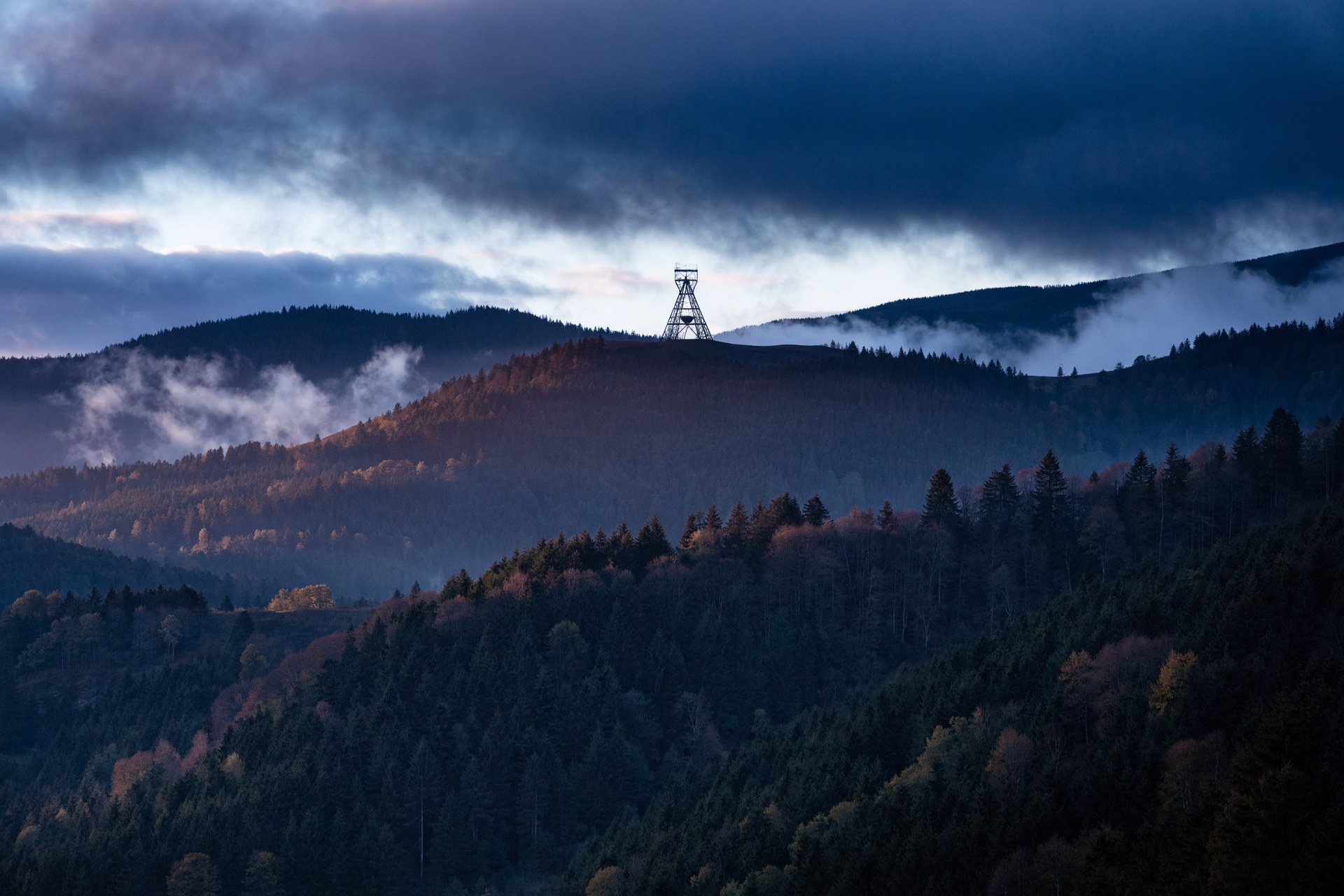
The Erzgebirge, the Ore Mountains, earned its name honestly. In the 12th century, silver strikes near Freiberg set off the first Berggeschrey, a rush of miners that raised whole towns out of the forest. A second rush followed around Schneeberg and Annaberg, and for centuries Ore Mountain silver funded the wealth of the Saxon electors. In 2019 UNESCO listed the mining region, on both the German and the Czech side of the border, as World Heritage.
The basement here is an old mountain core of gneiss and granite, threaded with hydrothermal veins. They yielded not only silver but tin, cobalt, bismuth, tungsten and uranium, along with the fluorite and baryte still worked today. The range of minerals is remarkable, and several were first described from these mines. For a look at the best of it, the Terra Mineralia collection in Freiberg is among the finest in Europe.
And gold? Saxony is no gold country on any large scale, but placer gold exists. As early as the Middle Ages people washed gold from the rivers of the Ore Mountain foreland, above all from the Mulde and its tributaries around Zwickau. The grains are tiny and the yield small, yet gold panning has a genuine tradition here that clubs and demonstration sites still keep alive. ORECAST keeps the distinction clear, documented occurrences on the map and river placers shown as what they are, a possibility rather than a promise.
Law and safety are not up for debate in the Erzgebirge. Centuries of mining have riddled the ground, old shafts and adits can collapse, and many spoil heaps are problematic because of their uranium and heavy-metal content. Entering and digging in former mining land is usually forbidden or needs a permit. At the World Heritage sites and on dumps that are listed monuments there is no collecting and no digging. The show mines are the only way underground. Panning requires the consent of the water and land owner, and the Saxon Schatzregal covers small finds too. Respect the rules and you get a landscape where eight hundred years of mining still echo through every village.
Minerals & raw materials in the Ore Mountains
Within 45 km of the Ore Mountains our database holds 4148 documented mineral and ore points. The most common commodities nearby:
Documented finds nearby
- BGR BSK1000: GneisGneis · source: BGR BSK10000 km
- Erzlagerstätte (Uran, Kobalt, Silber, Baryt, Fluorit)Uran, Kobalt, Silber, Baryt, Fluorit · source: LfULG Sachsen - Karte der Mineralisationen0.2 km
- Silber-Polymetall-Gänge (Quarz-Sulfid-Assoziation)Silber, Blei, Zink, Arsen, Kupfer, Cadmium · source: LfULG Sachsen - Karte der Mineralisationen0.3 km
- Baryt-Fluorit-GängeBaryt, Fluorit, Blei, Zink, Kupfer · source: LfULG Sachsen - Karte der Mineralisationen0.4 km
- Silber-Polymetall-Gänge (Quarz-Sulfid-Assoziation)Silber, Blei, Zink, Arsen, Kupfer, Cadmium · source: LfULG Sachsen - Karte der Mineralisationen0.4 km
- Baryt-Fluorit-GängeBaryt, Fluorit, Blei, Zink, Kupfer · source: LfULG Sachsen - Karte der Mineralisationen0.4 km
- Silber-Polymetall-Gänge (Quarz-Sulfid-Assoziation)Silber, Blei, Zink, Arsen, Kupfer, Cadmium · source: LfULG Sachsen - Karte der Mineralisationen0.4 km
- Baryt-Fluorit-GängeBaryt, Fluorit, Blei, Zink, Kupfer · source: LfULG Sachsen - Karte der Mineralisationen0.4 km
- Silber-Polymetall-Gänge (Quarz-Sulfid-Assoziation)Silber, Blei, Zink, Arsen, Kupfer, Cadmium · source: LfULG Sachsen - Karte der Mineralisationen0.4 km
- Baryt-Fluorit-GängeBaryt, Fluorit, Blei, Zink, Kupfer · source: LfULG Sachsen - Karte der Mineralisationen0.5 km
- Baryt-Fluorit-GängeBaryt, Fluorit, Blei, Zink, Kupfer · source: LfULG Sachsen - Karte der Mineralisationen0.6 km
- BiCoNi-Gänge (Karbonat-Sulfarsenid/Quarz-Arsenid)Silber, Kobalt, Nickel, Kupfer, Blei, Zink, Bismut, Arsen, Uran · source: LfULG Sachsen - Karte der Mineralisationen0.6 km
- Silber-Polymetall-Gänge (Quarz-Sulfid-Assoziation)Silber, Blei, Zink, Arsen, Kupfer, Cadmium · source: LfULG Sachsen - Karte der Mineralisationen0.6 km
- Silber-Polymetall-Gänge (Quarz-Sulfid-Assoziation)Silber, Blei, Zink, Arsen, Kupfer, Cadmium · source: LfULG Sachsen - Karte der Mineralisationen0.6 km
What the ground is made of
Official soil maps cover 56 % of the area within the radius. Each list names its source and refers to the part of that area the source describes. Where layers overlap, shares can add up to more than 100 %.
Soil types
Source: LfULG Sachsen BK50.
Material
Source: LfULG Sachsen BK50.
Fossils in the Ore Mountains
- Karl-Liebknecht-Schact, Zwickau-OlesnitzWestphalian D · source: PBDB27.3 km
- Carl Schacht, LugauWestphalian D · Grundflötz · source: PBDB27.8 km
- Gottes-segen-schacht, LugauWestphalian D · source: PBDB27.8 km
- Merkur-NorthBurdigalian · Most · source: PBDB28.9 km
- Ahníkov IIOrleanian · Most · source: PBDB28.9 km
- Libous mine, Sporice districtBurdigalian · Most · source: PBDB29.1 km
- TušimiceEarly Miocene · Most · source: PBDB30.3 km
- Chemnitz-AltendorfCisuralian · Luekersdorf · source: PBDB33 km
- Roitza, Beuten-BergAnisian · Gogoliner Schichten · source: PBDB33.4 km
- Chemnitz petrified forest (Chemnitz-Hilbersdorf)Sakmarian · Leukersdorf · source: PBDB33.9 km
History & archaeology in the Ore Mountains
- Gottesackerkapellearchaeological1 km
- Schloß Schlettaucastle_monument3.6 km
- Paßklausenturmcastle_monument7.3 km
- Langklotzbrückearchaeological8.5 km
- Schloß Hohenwendelcastle_monument9 km
- Kapelle und Mausoleumarchaeological9.2 km
- Mausoleumarchaeological9.3 km
- Schlangenbachtalbrückearchaeological9.9 km
- ehemalige Schmalspurbahnbrückearchaeological9.9 km
- Kunstmauerarchaeological10.7 km
Treasure hunting, law & safety
We'd rather underclaim than oversell: a promising geology is no guarantee, and you won't find invented numbers here. Digging and collecting are regulated across Europe and usually need a permit, and protected monuments and nature reserves are off-limits.
Frequently asked questions
Can I dig or collect finds in the Ore Mountains?
Digging and collecting finds are regulated in most of Europe and usually need a permit; protected monuments and nature reserves are off-limits. ORECAST shows where protected/historical sites lie so you can check the local rules first. It is information, not a permit.
Where can I find gold in the Ore Mountains?
Around the Ore Mountains, gold is at most plausible as river placer (hobby-scale panning), not a documented deposit unless flagged on the map. ORECAST clearly separates documented finds from merely plausible geology, and it never promises gold.
What minerals and raw materials occur in the Ore Mountains?
Within 45 km we list 4148 documented mineral/ore points. The most common nearby are: Blei, Kupfer, Arsen, Zink, Fluorit.
Are there fossils in the Ore Mountains?
Yes, 93 scientific fossil localities are recorded within 45 km (with geological age and formation).
Is digging dangerous in the Ore Mountains?
Possibly: former war zones can hold unexploded ordnance. Where a site is flagged with the ☢️ warning, never dig, it is a danger to life; contact the bomb-disposal service if in doubt.
Identify & compare:
Identify fossils · Identify rocks & minerals · Find gold · Find silver · Find gemstones · App comparison
Explore other regions:
Chemnitz · Freiberg (Ore Mountains) · Dresden · Leipzig · Berlin · Nuremberg