 orecast
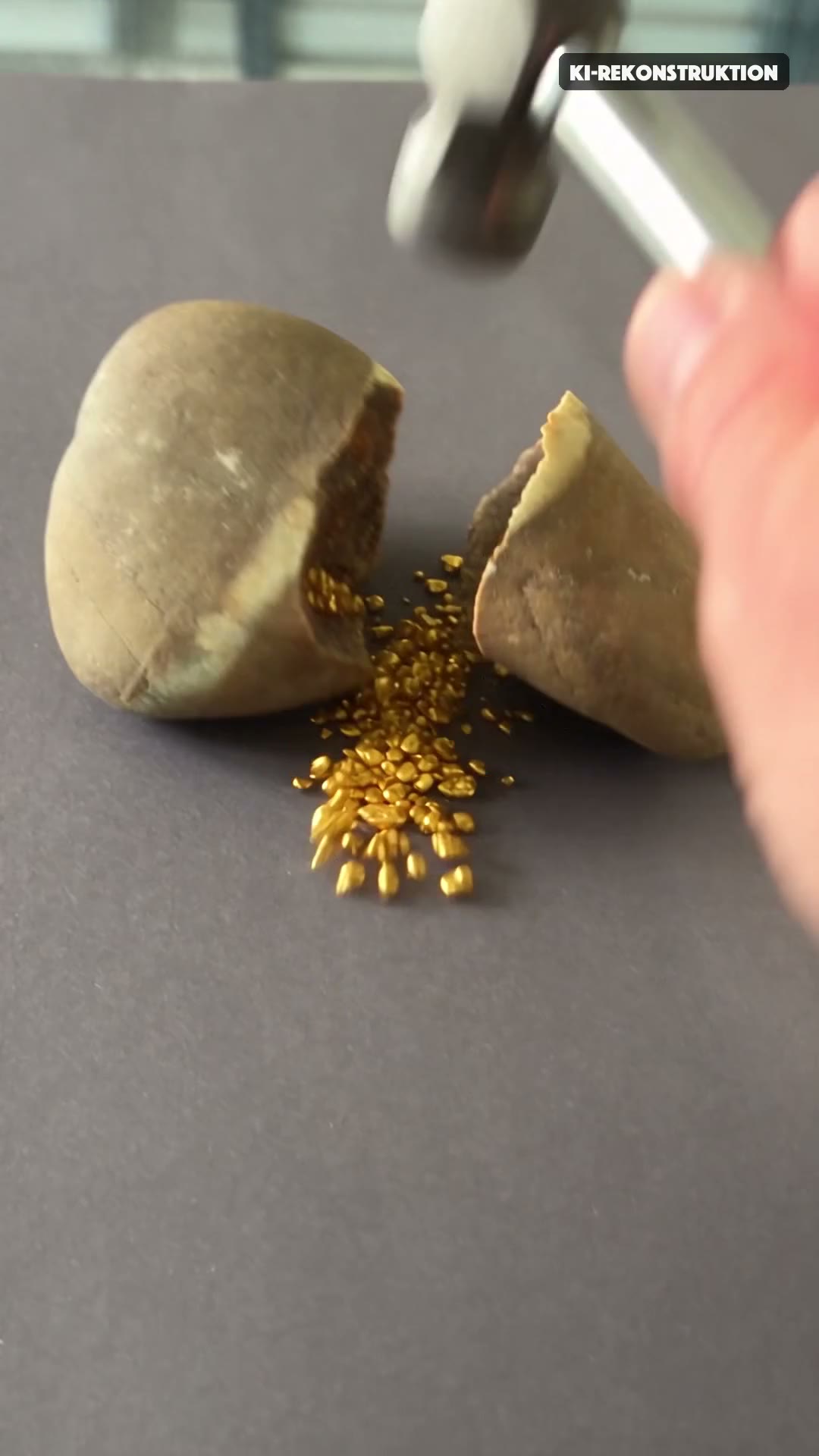
A stone with a white vein, a splash of water, one hammer blow, and round gold grains trickle out of the fracture. Videos like this have been running in the feeds for weeks. We took exactly such a stone, a real one from the Rhine near Cologne, and weighed it, scratched it and did the maths. This is the write-up to the video.
The stone
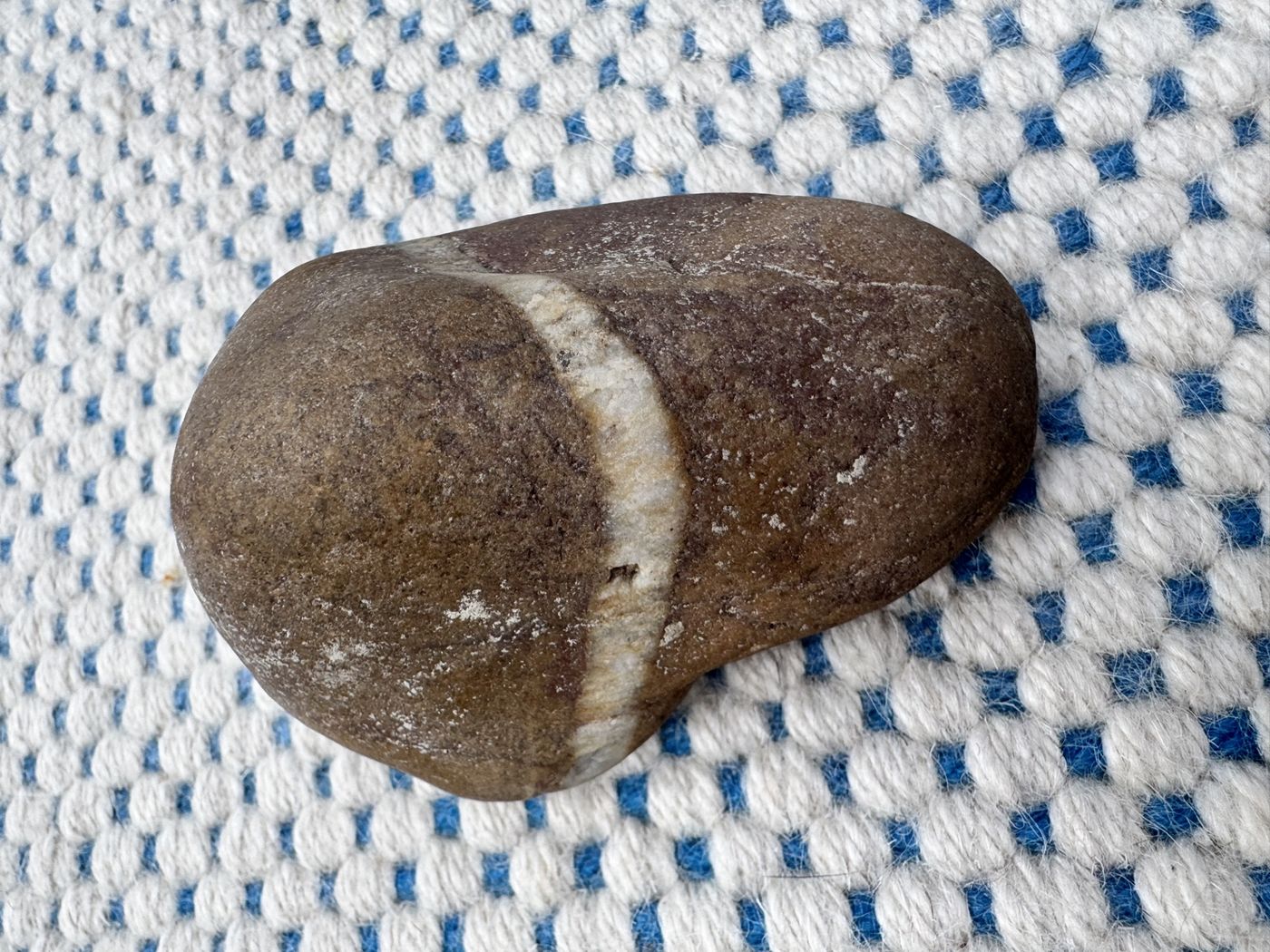
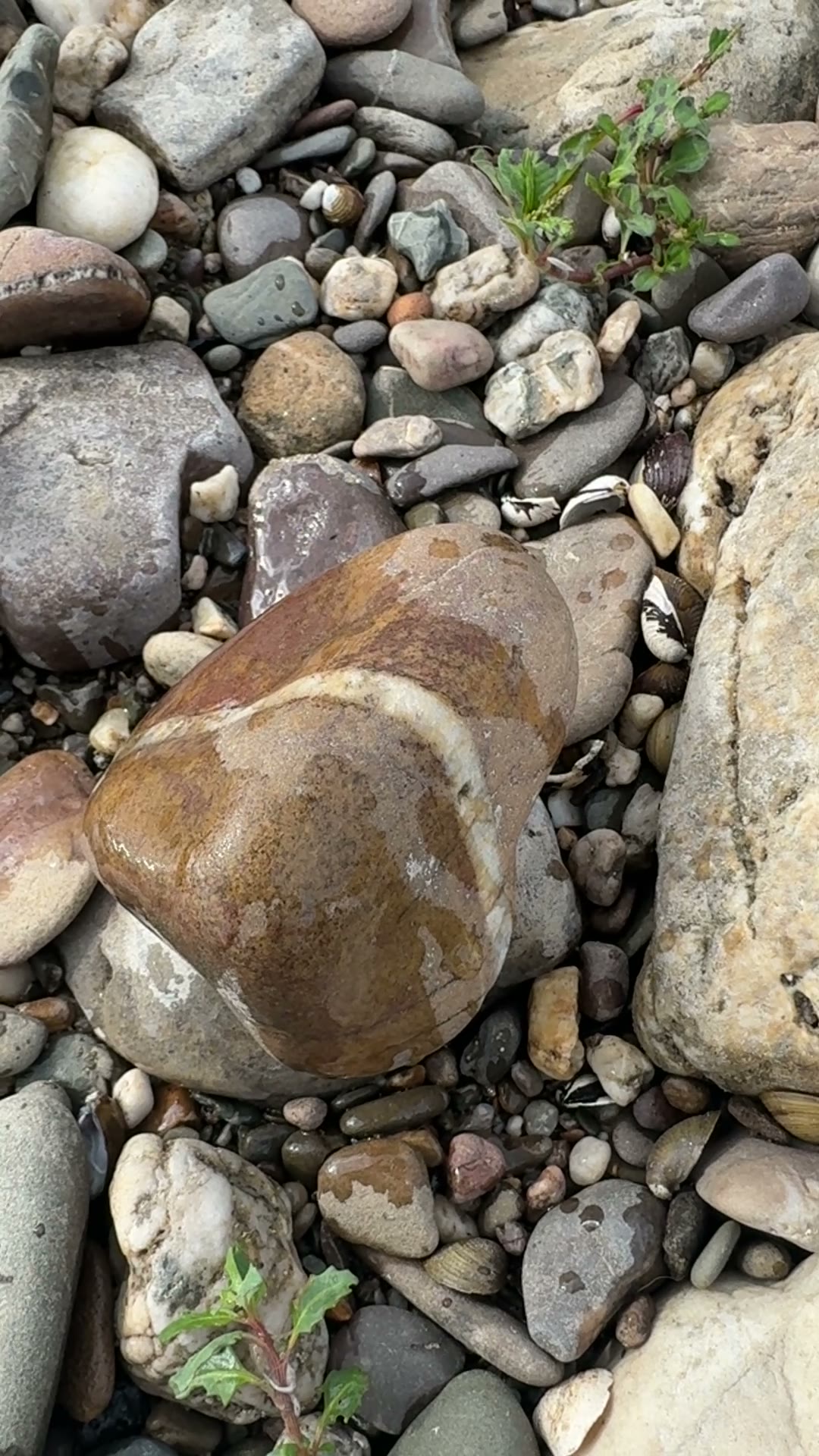
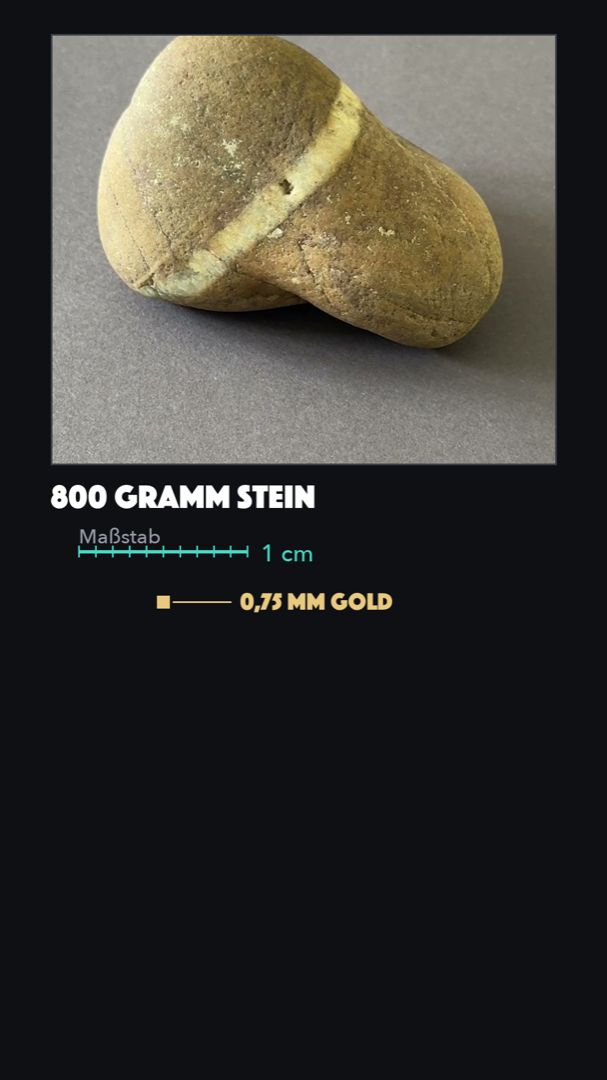
A well-rounded cobble, 800 grams, from the bank of the Rhine in Cologne. Fine-grained, ochre-brown rock with reddish streaks, crossed by a white band five to ten millimetres wide with yellowish rims. From a photo the rock type cannot be pinned down; the best fit is a sandstone or quartz sandstone with a quartz vein filling, the kind that reaches the Cologne gravels from the Rhenish Massif. Cologne geologist Sven von Loga describes exactly this class of pebble for the local riverbank.
Why nothing falls out of the stone
Gold is soft. It is the most malleable metal there is, with a Mohs hardness of 2.5 to 3. You can hammer it flat like lead or copper. Under the hammer it spreads, it never shatters. Quartz has a hardness of 7 and breaks brittle. Crack open a gold-bearing quartz and the quartz breaks while the gold smears into foil on the fracture face. It does not drop out as neat little nuggets. The US Geological Survey lists this as a field test: pyrite, chalcopyrite and mica crumble under a needle, gold dents like soft lead.
The maths
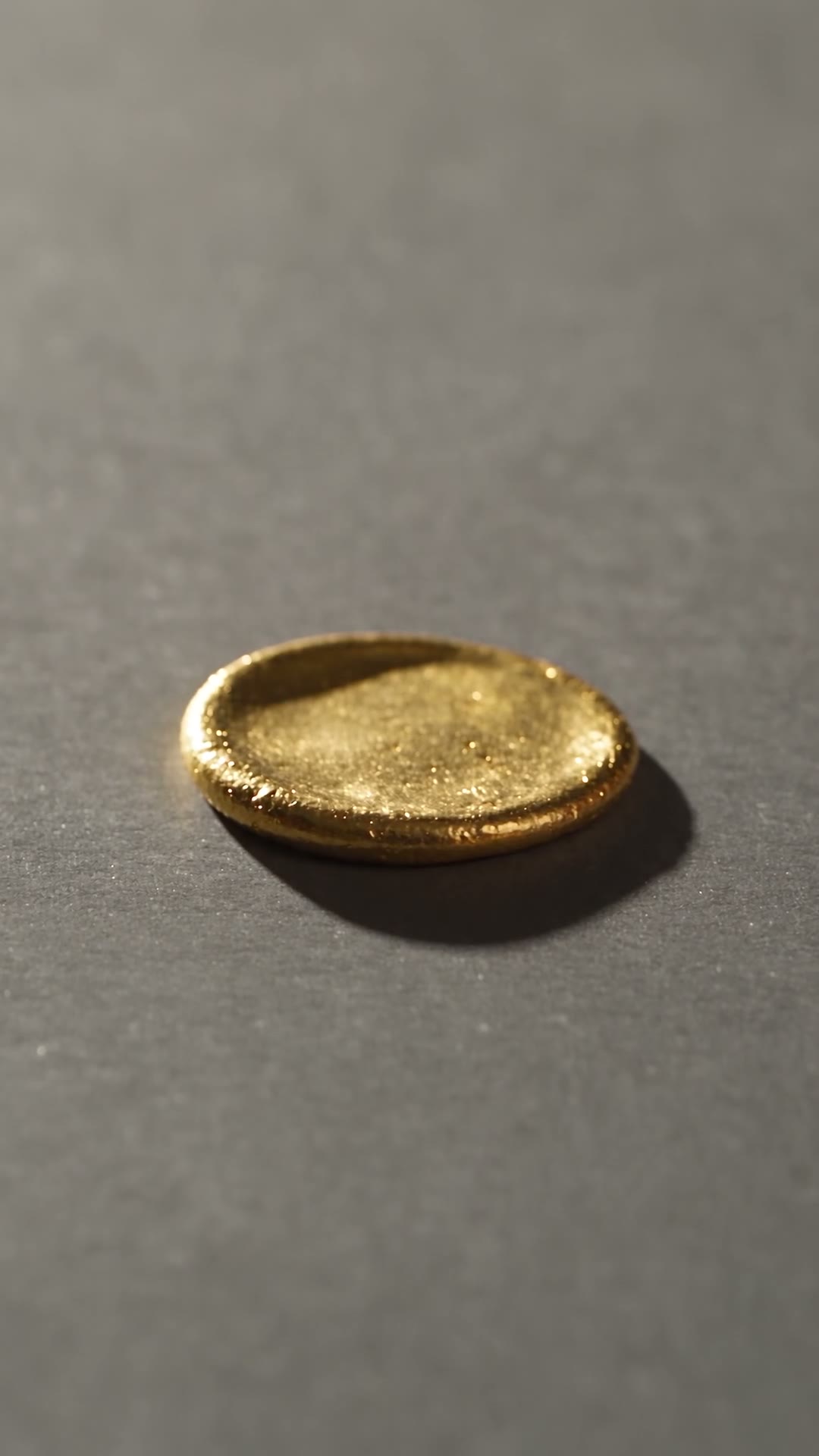
Let us grant the videos their best case and suppose this stone were gold ore. A good underground mine works ore at around ten grams of gold per tonne. In 800 grams of rock that makes eight milligrams. That is a cube 0.75 millimetres on a side, and even that would not sit in one piece but be scattered microscopically, mostly locked inside pyrite.
For a single visible gram to fall out, the stone would need 1,250 grams per tonne. Germany's historic gold mines at Goldkronach in the Fichtelgebirge worked ore at two to four grams per tonne, according to the Federal Institute for Geosciences and Natural Resources. The videos therefore demand several hundred times the grade of a real German gold mine, from a pebble picked up at random.
Wrong shape, wrong place
The grains in the videos are round and smooth. That is the shape of placer gold from a riverbed, rounded by water over a long time. Gold from a quartz vein looks different, jagged, wiry, dendritic and firmly intergrown with the quartz. The videos show river gold in a mining situation.
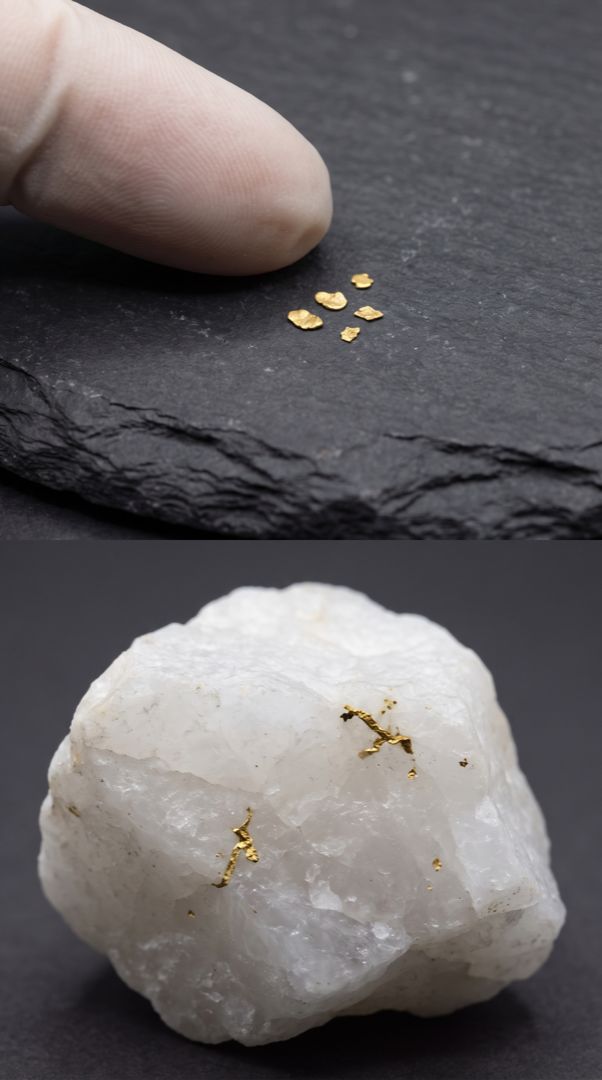
And Rhine gold near Cologne does exist, just not inside the pebble. Sven von Loga pans for it on the Cologne riverbank and teaches courses there. It is the finest flakes, about 200,000 of them to the gram, panned over roughly two weeks. The BGR describes Rhine gold as placer gold almost exclusively in the form of flakes up to 0.3 millimetres. That gold never came out of Cologne pebbles; it comes from the source regions upstream and lies loose in the sand. The pebble is transported debris from the same process, not its source.
For completeness, the honest counter-example: in 1849 a quartz cobble the size of a hen's egg was found on the Ill near Strasbourg, containing 17 grams of gold. In our sources that is a single such find in more than 170 years.
The test
We scratched the white vein with a steel awl. Nothing comes off, the steel slides. So the band is harder than steel, well above hardness 5.5. Calcite at hardness 3 is ruled out; the vein is quartz. Exactly the rock gold sits in worldwide. And still there is none in it.
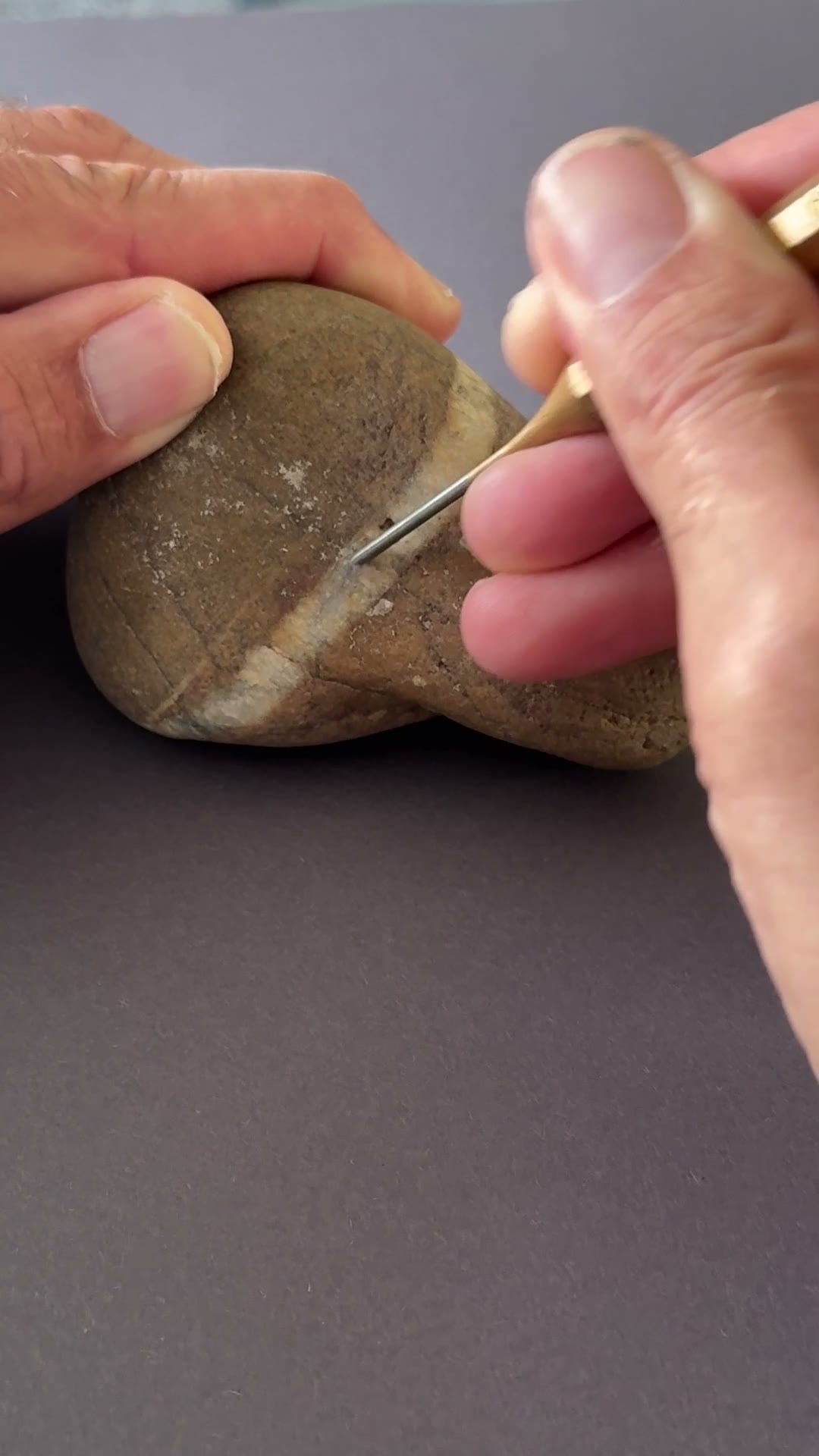
If you find a stone like this yourself, scratch the vein with a steel nail. If nothing comes off, it is quartz. If a drop of vinegar essence fizzes on scraped-off powder, it is calcite. Either way: no gold. And if something glints golden, use the streak test on unglazed ceramic: gold leaves a golden-yellow streak, pyrite a greenish-black one.
What is real in the videos
We do not want to overshoot. Gold in quartz veins is real, most primary gold worldwide sits exactly there. Pouring water over a rock is genuine prospecting practice, wet rock shows minerals more clearly. And honest confusion is possible, pyrite and mica glint golden in quartz. What does not happen is the scene itself. Gold grains do not fall out of a pebble, because gold does not shatter and because it is not in there in such quantities.
If someone sent you one of these videos, send them this article back. And to see where gold, ores and fossils are actually documented across Europe, take a look at the ORECAST map.
Sources
- Federal Institute for Geosciences and Natural Resources (BGR), Commodity Top News 30 (Elsner 2009): Rhine gold grades, form of the placer gold, Goldkronach.
- Sven von Loga, Kölner Stadt-Anzeiger, 23 August 2012: the rocks on the Cologne riverbank.
- Sven von Loga, DOMRADIO interview, 25 April 2019: gold flakes on the Cologne riverbank.
- US Geological Survey: field tests to tell gold from pyrite and mica.
- The 1849 find on the Ill after Kirchheimer 1969, as cited in the German Wikipedia article on Rhine gold panning.
Images 1, 4 and 5 of this article are AI reconstructions and labelled as such. The stone, the riverbank shot and the scratch test are real.