 orecast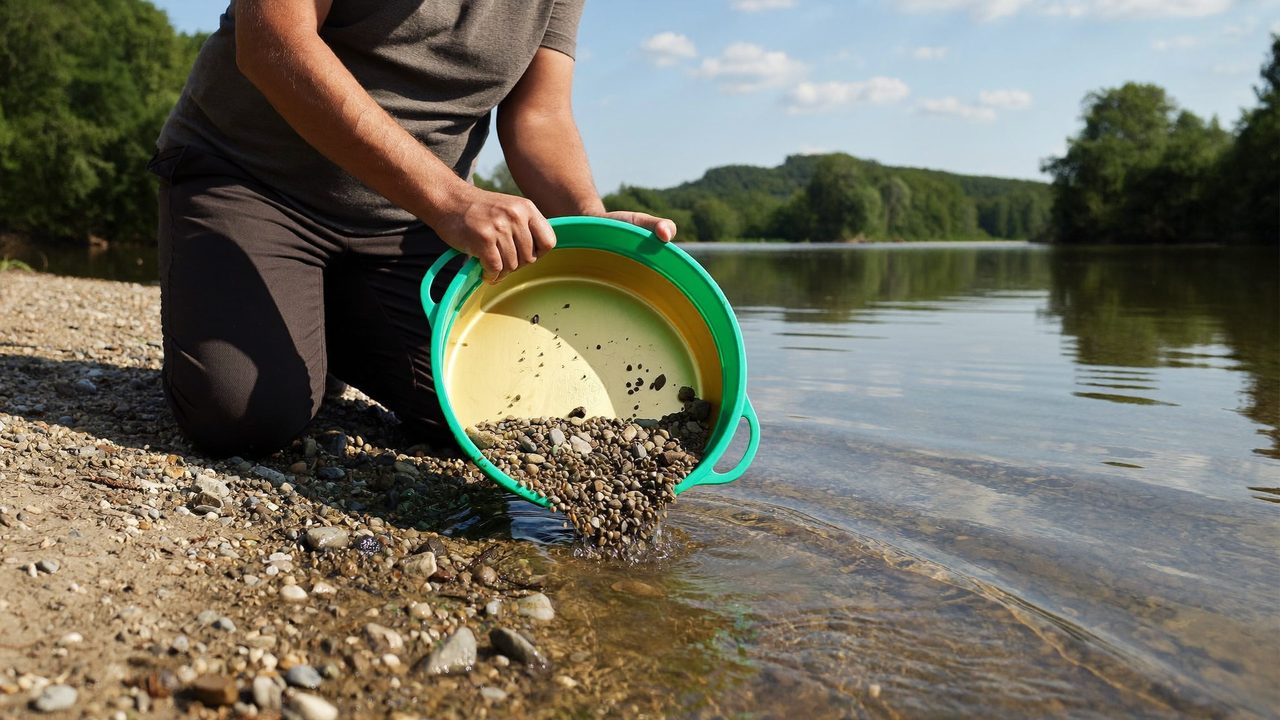
Yes, there is real gold in the Rhine. Not nuggets and not veins, but fine flakes, wafer-thin flitters often smaller than a pinhead. With some patience and a simple pan you can still wash them out of the gravel, the way people have done on the Upper Rhine for centuries. Nobody gets rich from it. But a few golden flakes in the bottom of your pan are their own reward.
Rhine gold comes from the Alps. Rivers carry tiny gold particles out of the rock of the Aar massif, and the Rhine sorts them over hundreds of kilometres and drops them wherever its current slows. The gold sits most densely along the Upper Rhine between Basel and Karlsruhe, above all on the Baden side. It used to be a trade. In the 18th and 19th centuries gold washers worked the river, and the state of Baden even struck its own ducats from the yield, stamped with the word Rheingold. By around 1870 the work no longer paid, the returns were too small, and the trade died out.
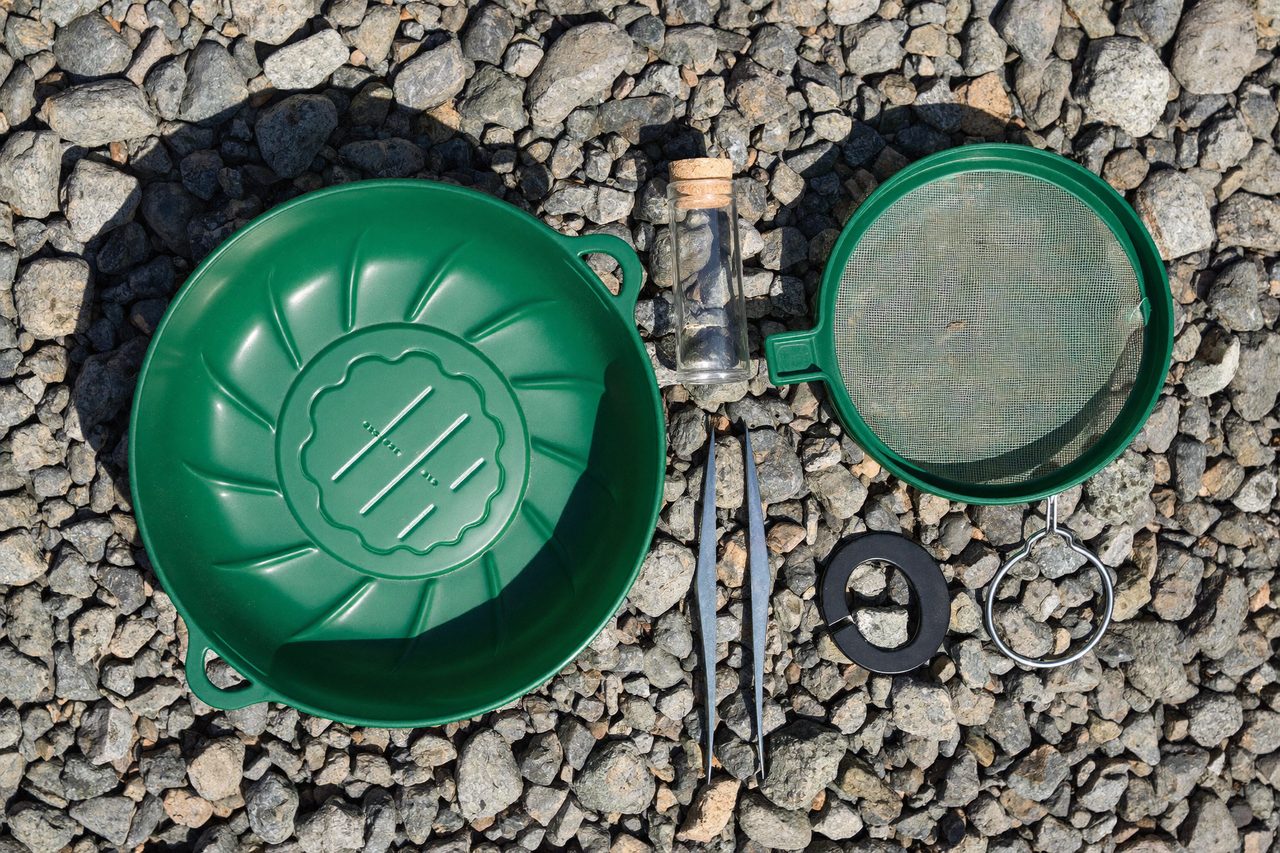
You do not need much. The key piece is the gold pan, a shallow dish with moulded riffles, today usually green or black plastic because gold shows up better on it than in an old tin plate. Add a sieve to sort out coarse stones first, a small vial for your finds, tweezers and a magnet. Rubber boots or waders keep you dry.
Here is how the washing works, step by step.
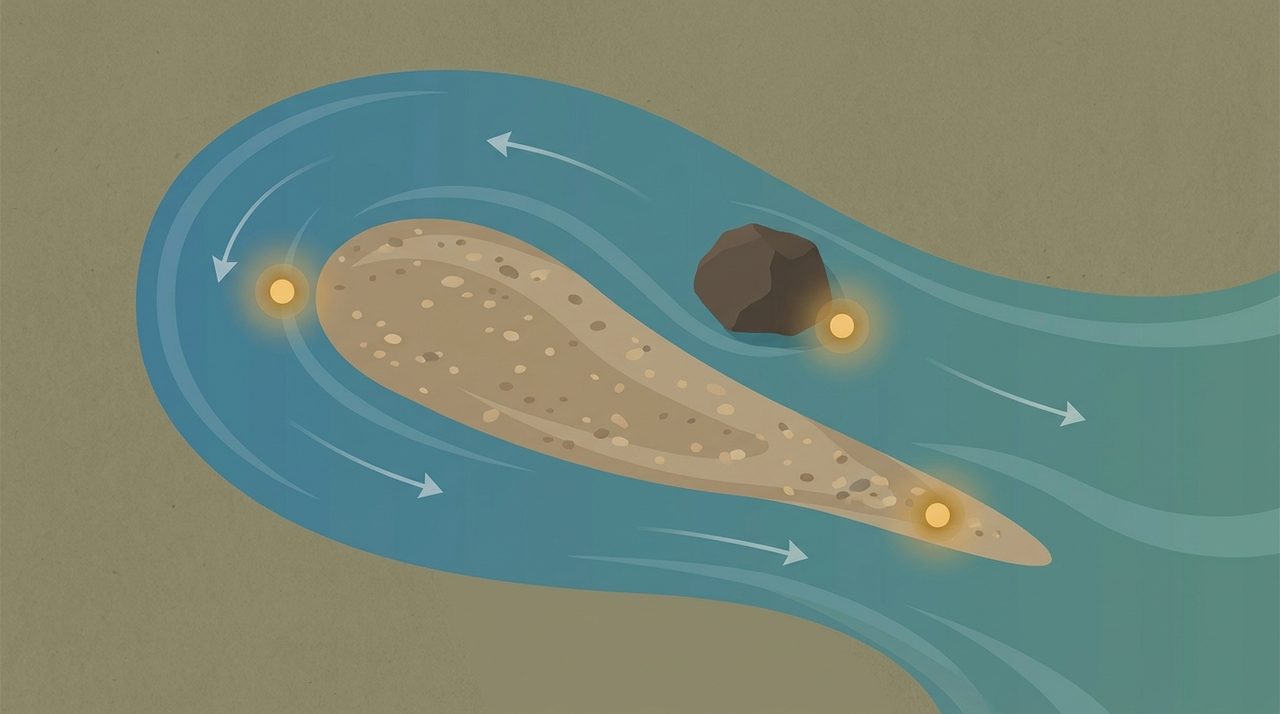
1. Find the right spot. Gold is heavy and collects where the water slows down. Look on the inside of river bends, behind large rocks, at the downstream end of gravel bars and in root mats along the bank. These places act like natural traps. The main current of the Rhine, by contrast, is too fast and far too dangerous, and nobody pans there.
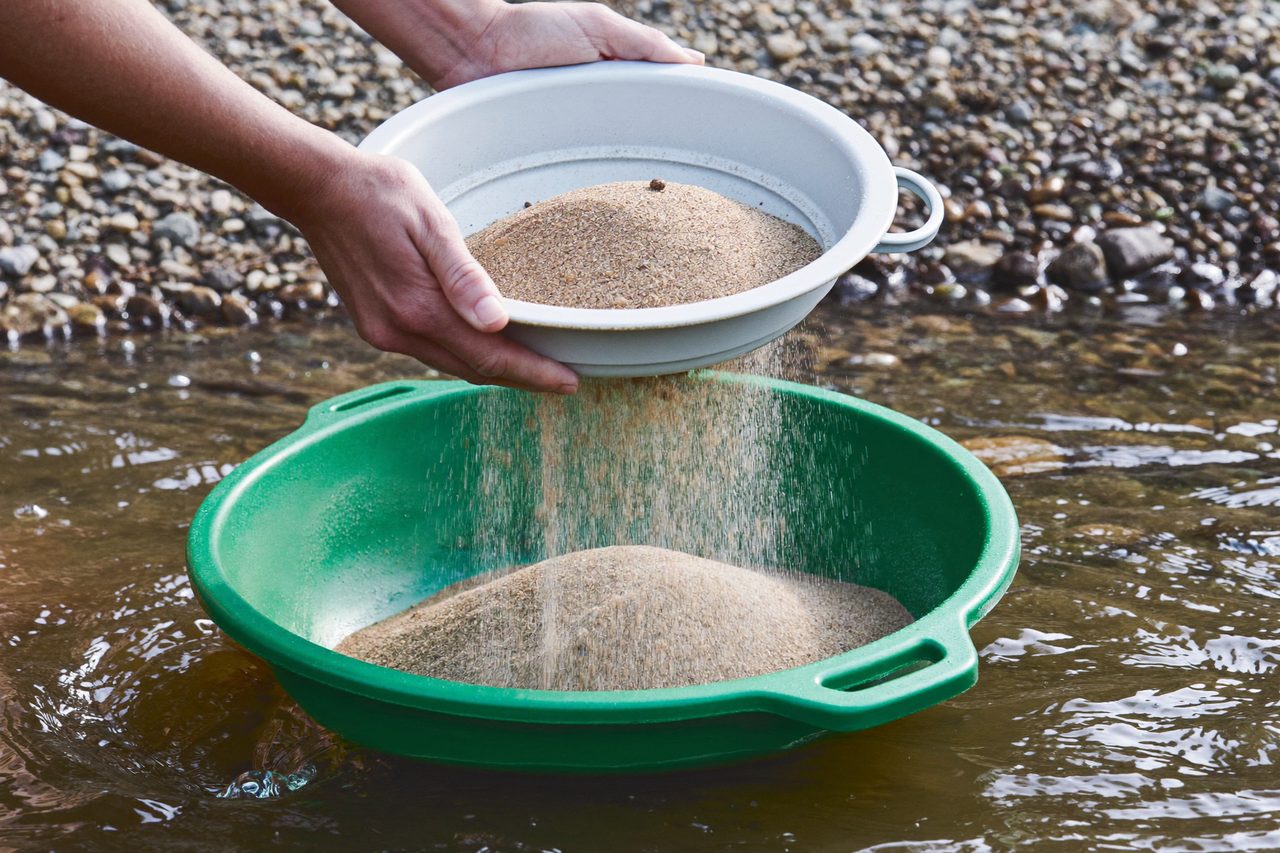
2. Scoop and sieve. Put the top, finer gravel into your sieve and hold it over the pan. Throw the coarse stones away and let the fine sand fall into the dish. That way you do not work through more material than you have to.
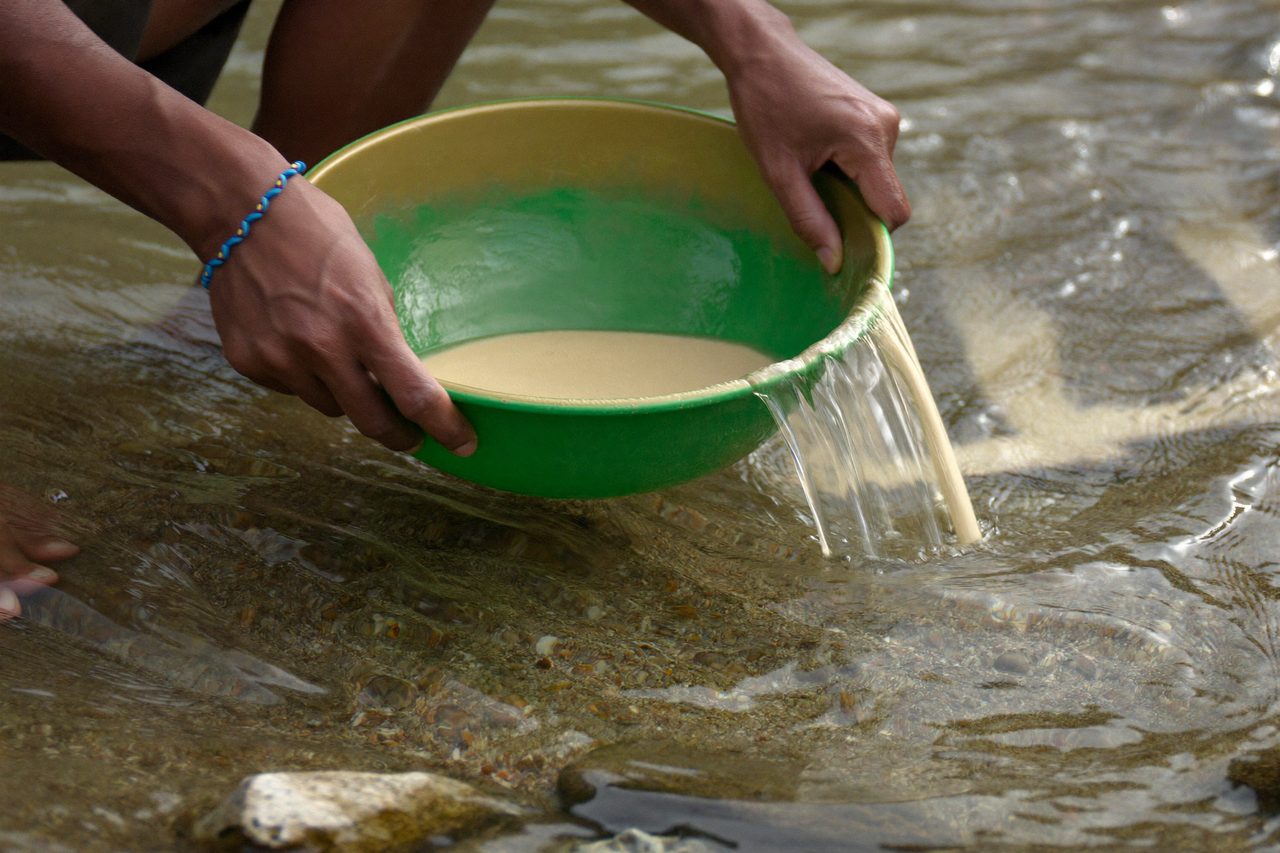
3. Swirl and wash. Hold the pan under water and shake it level so the heavy material settles to the bottom. Then tilt it slightly forward and, with a circular motion, let the light sand run off the rim layer by layer. Go slowly and keep dipping it back under. Rhine gold is so fine and flat that it floats off easily, so a drop of dish soap in the water breaks the surface tension and helps.
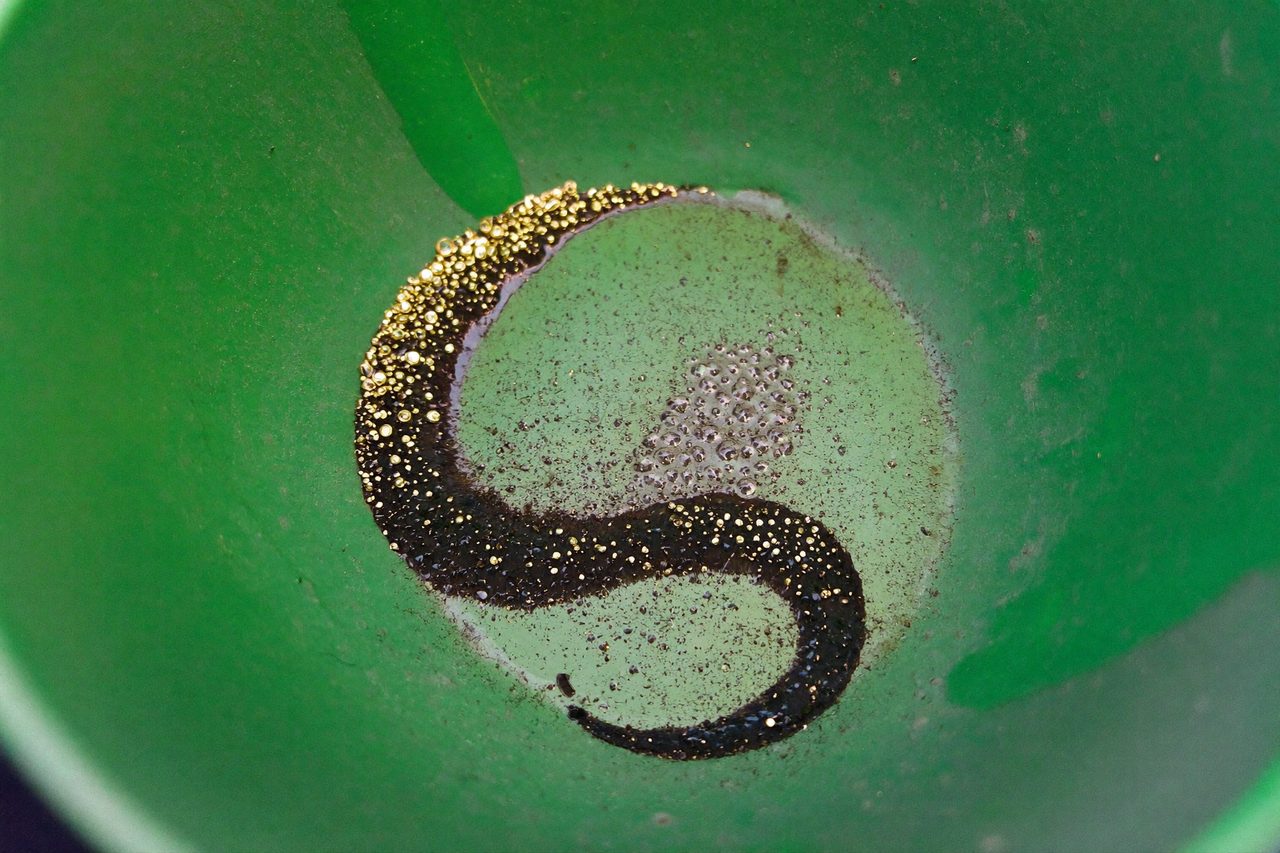
4. The black sand. After a few minutes a dark residue is left at the bottom, the black sand of heavy minerals such as magnetite. That is a good sign, because wherever the heavy black sand catches, the gold catches too. Use the magnet to lift off the magnetic part carefully.

5. Secure the flakes. Now swirl out the rest very gently. Whatever flashes gold and stays put while the black sand moves on are your flakes. Lift them into the vial with a damp fingernail or the tweezers. Its look-alikes, pyrite and mica, glitter in hard angles and shatter, while real gold is soft, rolls flat and shines even in shadow.
How much do you get? Honestly, very little. A good day on the Upper Rhine yields a few tiny flakes, a bad one leaves the pan empty. It is not about the material value, but about the thing itself and about seeing a stretch of river with different eyes.
Law and safety. Hand panning, with the pan alone and no machines, counts in the state of Baden-Württemberg as common use of the water and is usually tolerated. But it is not allowed everywhere and not without conditions. Large parts of the Rhine floodplains are nature reserves or belong to Natura 2000, and searching there is off limits. You must not dig into the bank, damage the slope or stir up spawning grounds. When in doubt, ask the responsible water and environmental authority. And the Rhine is no harmless brook. It is one of the busiest waterways in Europe, with strong currents, cold water and waves from passing ships. Never step into the main current, stay on calm gravel bars and side arms, and do not pan alone at a blind spot.
ORECAST shows you where gold on the Upper Rhine is documented or geologically plausible, and where protected and historical sites lie that you need to avoid. That lets you plan your day at the water before you unpack the pan. It is not a promise of gold, but an honest starting point.
Images generated with AI.
Illustrations generated with AI.
Frequently asked questions
Is there really gold in the Rhine?
Yes, though not as nuggets or veins but as fine flakes, wafer-thin and often smaller than a pinhead. The gold washes down from the Alps, out of the rock of the Aar massif, and the river sorts it over hundreds of kilometres, dropping it wherever the current slows. It sits most densely on the Upper Rhine between Basel and Karlsruhe, above all on the Baden side, where panning was a proper trade in the 18th and 19th centuries. The state of Baden even struck ducats from the yield, stamped with the word Rheingold.
What equipment do you need to pan for gold in the Rhine?
The one essential item is a shallow gold pan with moulded riffles, usually green or black plastic today because gold shows up on it far better than in an old tin dish. Add a sieve to sort out the coarse stones, a small vial for your finds, tweezers, a magnet for the black sand and rubber boots or waders. Then look for the places where the water slows: the inside of river bends, the lee of large rocks, the downstream end of gravel bars and root mats along the bank.
How much gold do you actually get in a day on the Rhine?
Honestly, very little. A good day on the Upper Rhine leaves you with a few tiny flakes, a bad one with an empty pan. The professionals gave up around 1870 for exactly that reason: the returns were too small to live on. What is left is the activity itself, not the material value.
Is panning for gold in the Rhine legal?
Panning by hand, with nothing but the pan and no machinery, counts in the German state of Baden-Württemberg as Gemeingebrauch, the ordinary public use of a waterway, and is normally tolerated. That comes with limits: much of the Rhine floodplain is a nature reserve or part of the Natura 2000 network and is off limits, and digging into the bank, damaging the slope or disturbing spawning grounds is never acceptable. Ask the local water and environmental authority if you are unsure. Safety matters just as much, because the Rhine is one of the busiest waterways in Europe: stay on quiet gravel bars and side arms, keep out of the main current and do not pan alone somewhere you cannot see what is coming.